Third Party Inspections for Barndominium Builds
Learn how third party inspections protect your barndominium build. Discover types, costs, timelines, and how to choose a qualified inspector for your project.
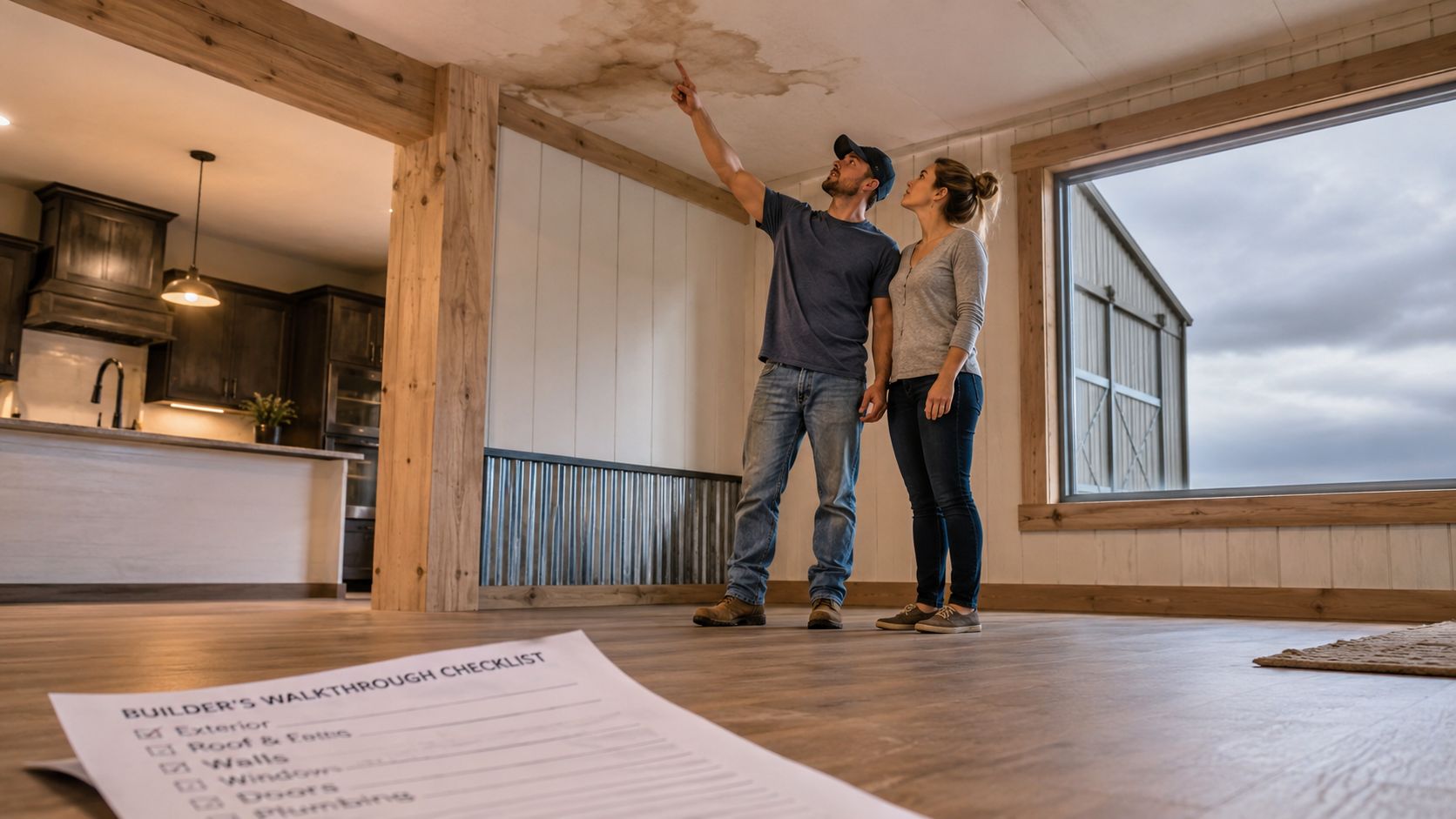
You're standing in a half-finished barndominium, the builder says the shell is sound, the county passed it, and the budget is already stretched. Then a stain shows up after the first hard rain, a door goes out of square, or a hidden connection turns out to have been rushed. That's the moment most buyers realize the problem wasn't whether somebody inspected the job, it was who inspected it, what they were checking, and who takes the hit if they missed something.
Table of Contents
- Why Barndominium Buyers Need Independent Eyes on Site
- Types of Third Party Inspections for Post-Frame Construction
- Third Party Inspections Versus Municipal and Builder Checks
- Scope Deliverables Cost and Timing Explained
- How to Choose a Qualified Barndominium Inspector
- The Liability Gap Most Buyers Overlook
- Fitting Inspections into Your Build Timeline and Contract
- Where to Find and Verify Local Inspectors
Why Barndominium Buyers Need Independent Eyes on Site
A barndominium can look finished and still be wrong. The shell goes up, the trim looks clean, the county signs off, and everybody moves on. Then the buyer starts noticing things that don't show up in a quick walkthrough, a missing moisture detail at a metal-to-wood transition, a pier issue hidden below grade, or a connection that only reveals itself when the structure starts behaving under load.
That's why third party inspections matter on post-frame and barndominium projects. Municipal inspections are there to verify minimum compliance, not to optimize build quality for your family's use, your resale value, or your tolerance for risk. The gulf between “passed” and “built right” is where buyers get burned.
Code compliance is not the same as quality assurance
In a barndominium, a lot of the important work happens in the places casual eyes miss. Steel meets wood. Foundation piers meet framing. Insulation, vapor control, and roof details all have to work together. A builder can close a permit file and still leave the owner with a building that performs poorly because nobody was assigned to verify the details that matter most.
Practical rule: if a detail is hard to see after drywall or metal skin goes up, it needs to be verified before concealment.
That's the practical value of independent oversight. A buyer-commissioned inspector is there to verify the build against the agreed scope, not to protect the builder's schedule. In a project where the structure, envelope, and finish decisions are tightly linked, that independence is not a luxury, it's cheap insurance against expensive rework.
Barndominiums need more than a generic home check
A standard residential inspector can be perfectly competent and still miss post-frame issues because the project isn't a standard stick-built house. The site conditions, the structural system, and the details around metal building components require sharper attention. If you're building shell-only, turnkey, or somewhere in between, you need inspection eyes matched to the scope you bought.
That's the mindset shift. Don't ask whether inspection happened. Ask whether the right party verified the right work at the right time, before the work got hidden.
Types of Third Party Inspections for Post-Frame Construction
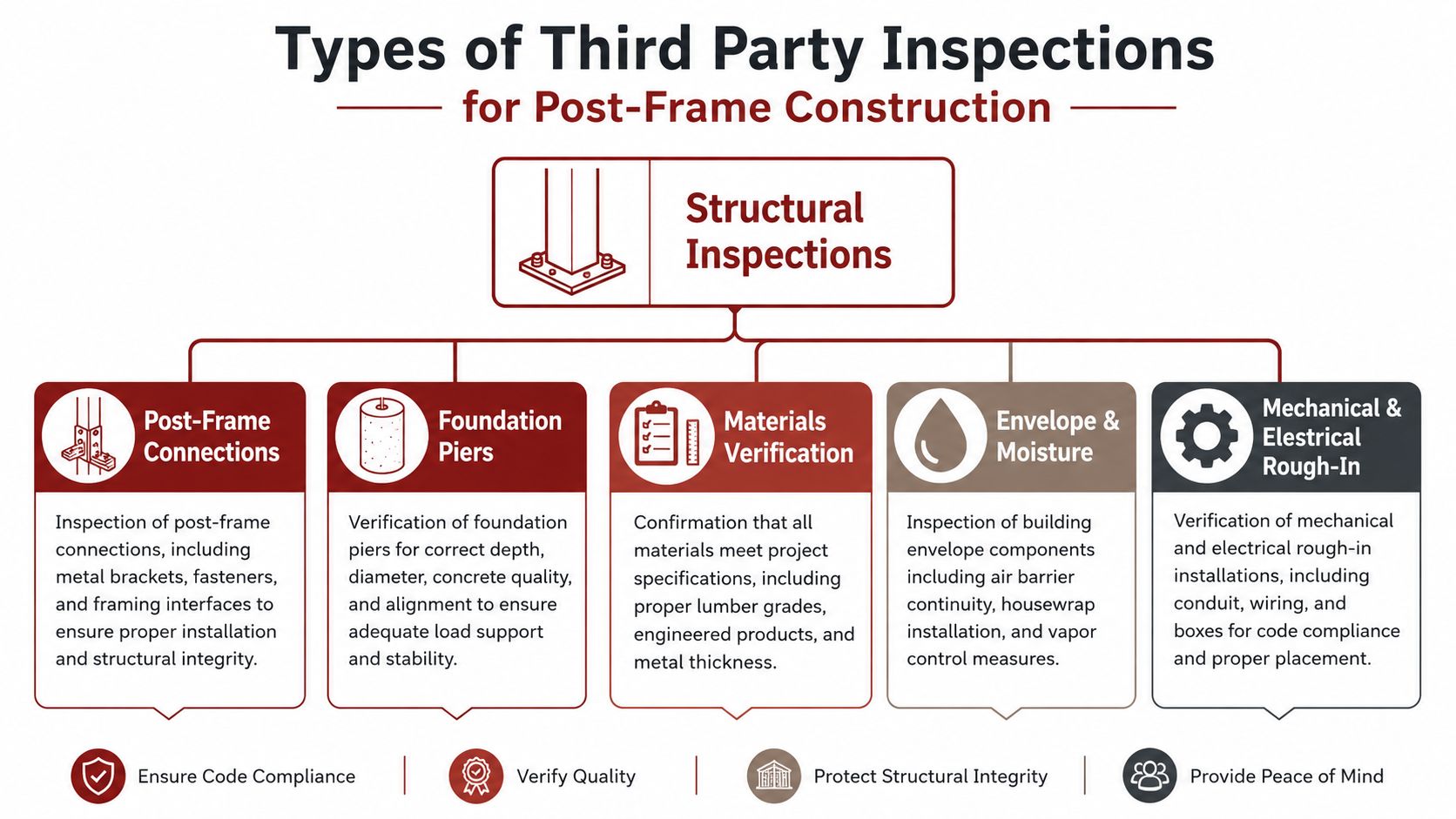
Third party inspections are independent checks against stated requirements. On a barndominium, that usually means more than one visit and more than one discipline. A single “general inspection” is too blunt for a project with piers, steel, framing, envelope transitions, and mechanical rough-ins all moving at once.
Structural inspections catch the load path before it gets covered
The first layer is structural verification. For post-frame construction, that means checking post embedment, foundation pier alignment, anchor points, and the connections that move load from roof to ground. If a pier is out of tolerance or a connection is wrong, the failure may not be visible after the slab or finish work goes in.
This is the layer that protects the bones of the project. In industrial procurement, the same mindset shows up as a 100% check on critical acceptance characteristics like visual condition, dimensional conformance, and wall thickness verification, with witnessed tests when the specification requires them. The point is simple, latent defects shouldn't be allowed to disappear behind finished surfaces. GEM procurement specification on third party inspection requirements
Materials verification keeps substitutions from sneaking in
Materials checks matter when the plan calls for a specific lumber grade, steel thickness, or fabricated component. An inspector should confirm that what arrived on site matches what was purchased and what the drawings require. That's especially important on projects where substitutions can hide inside invoices or delivery tickets.
For barndominiums, you catch the quiet damage caused by “close enough” materials. A builder can keep the schedule moving while using the wrong piece in the wrong place, and the owner may not find out until there's movement, corrosion, or failed alignment later on.
Envelope and moisture inspections are where most owners get surprised
This is the layer that protects the building from water and air leakage. The inspector should pay attention to flashing, vapor control, penetrations, and the transitions where metal, wood, and sealants meet. Those are the places that create trouble after move-in.
If the inspector waits until the building is buttoned up, the most important evidence may already be hidden.
Mechanical and electrical rough-in checks should happen before closure
Conduit runs, wiring pathways, and other rough-ins need to be reviewed before the walls are closed. That doesn't mean the inspector replaces the trades. It means someone independent confirms that the work is organized, code-aware, and consistent with the project scope before concealment makes correction expensive.
For a shell-only build, you may not need every trade inspection from day one. For a turnkey build, you usually do. The key is to match the inspection plan to the scope you signed, not the scope somebody assumes you wanted.
Third Party Inspections Versus Municipal and Builder Checks
A lot of buyers think they already have inspections covered because the county visits the site and the builder says they check their own work. That sounds reassuring, but it's not the same thing as independent verification. Each layer protects a different interest, and none of them replaces the others.
| Inspection Layer | Primary Focus | Typical Time on Site | What It Misses | Who It Protects |
|---|---|---|---|---|
| Municipal inspection | Code minimums and permit compliance | Limited | Build quality beyond minimum code, workmanship details, project-specific preferences | Public safety and permitting authority |
| Builder self-check | Schedule, coordination, and internal quality control | Varies by crew | Self-interest bias, missed defects, weak accountability to the buyer | Builder and trade coordination |
| Third party inspection | Independent review of agreed scope and stated requirements | Focused on the milestone being verified | Anything outside the commissioned scope, unless specifically written in | Buyer, lender, and project documentation |
Municipal inspectors are there to make sure the project clears code thresholds. They are not your quality-control department. Builder checks can be useful, but they serve the builder's workflow and risk management, not yours.
Third party inspections fill the gap between those two. They're the buyer's independent check on the work that matters most, especially on a barndominium where the structural system and envelope are more specialized than a typical house. If you want a practical overview of how inspection roles get folded into project planning, this builder-facing reference is useful: permitting and inspection workflow notes.
The mistake is assuming overlap equals protection. A county sign-off, a builder walkthrough, and a buyer's excitement can all coexist with a missed defect. You don't want redundancy for show. You want clear responsibility, so each layer catches what the others are likely to miss.
Scope Deliverables Cost and Timing Explained
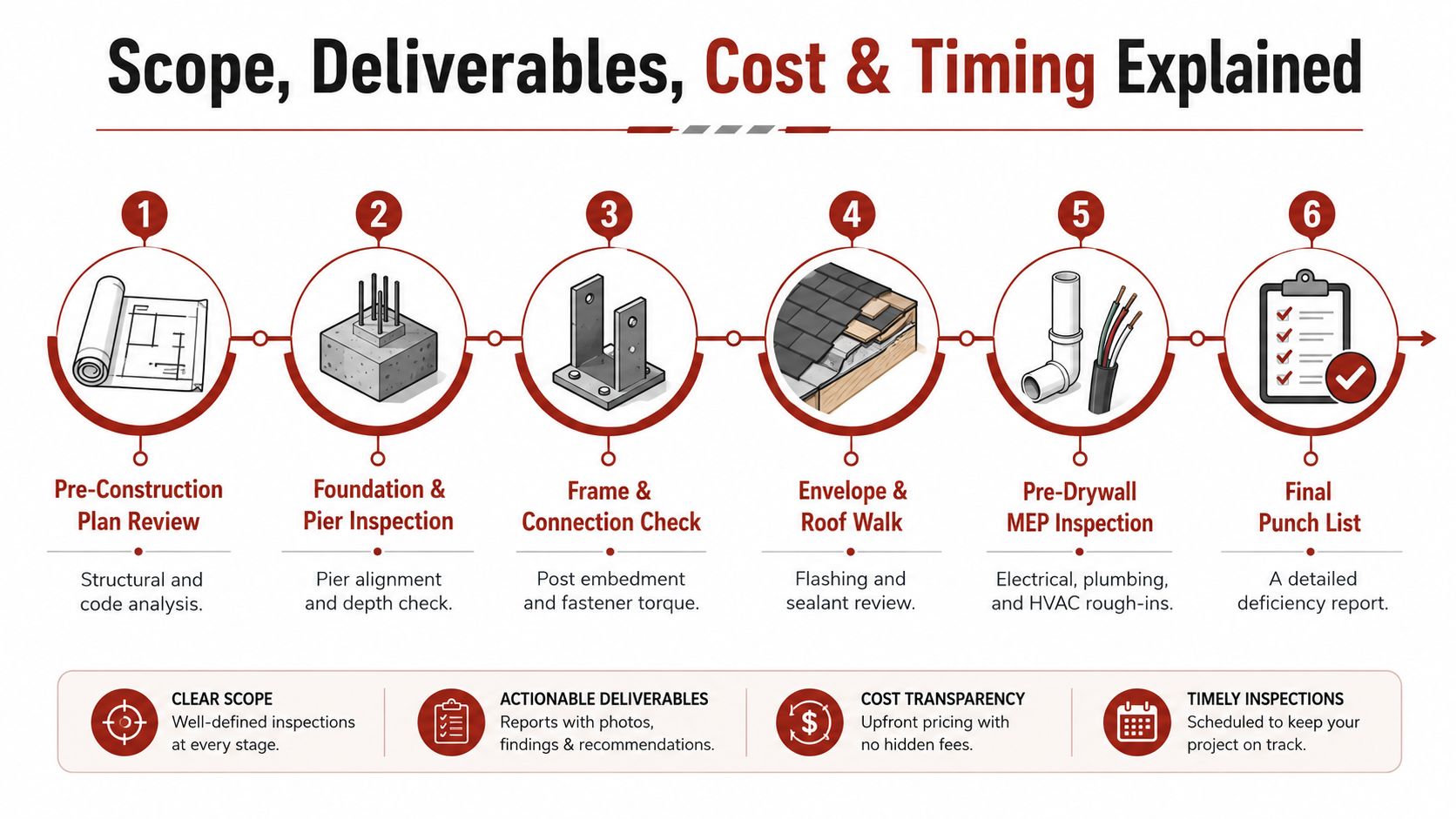
A smart inspection plan starts with scope, not price shopping. If you don't define the stages, the inspector can't protect you from the work that gets covered, poured over, or buried too soon. The right plan usually includes pre-construction review, foundation and pier checks, framing and connection verification, envelope review, pre-drywall mechanical and electrical review, and a final walkthrough.
Deliverables should be useful, not decorative
A real inspection deliverable should include photos, a deficiency list, and a clear statement about whether the item passed, failed, or needs re-inspection. If the report reads like marketing copy, it's weak. If it gives you a punch list the builder can act on immediately, it's doing its job.
Good reports create leverage. Bad reports create argument.
You also want a re-inspection protocol in writing. That matters because a defect isn't solved just because someone noticed it. The inspector should be able to confirm correction before the project moves on to the next stage.
Timing should follow the build, not the calendar
Schedule the inspector around hold points. Before concrete is covered. Before framing is concealed. Before envelope details disappear behind finish work. Before final payment leaves your account.
That sequence is the whole point. Once a bad detail gets buried, the cost of correction climbs fast, and your position weakens. Buyers who wait until the end usually find problems they can't easily prove or fix.
Cost should track complexity and risk
I'm not going to fake a number here, because inspection pricing varies by market and scope. What matters is the relationship between price and risk. A cheap general visit is the wrong place to save money if it means skipping the foundation, connection, or pre-drywall checks that prevent the worst failures.
Ask for a scope-based quote, not a vague “home inspection” price. If the build is shell-only, focus spending on structure and envelope. If it's turnkey, widen the plan to include rough-ins and final verification. The money should go where hidden defects are most expensive to correct.
How to Choose a Qualified Barndominium Inspector
The first filter is not friendliness. It's competence. A qualified inspector should be able to explain what they inspect, what they don't inspect, and how they document findings without dodging accountability.
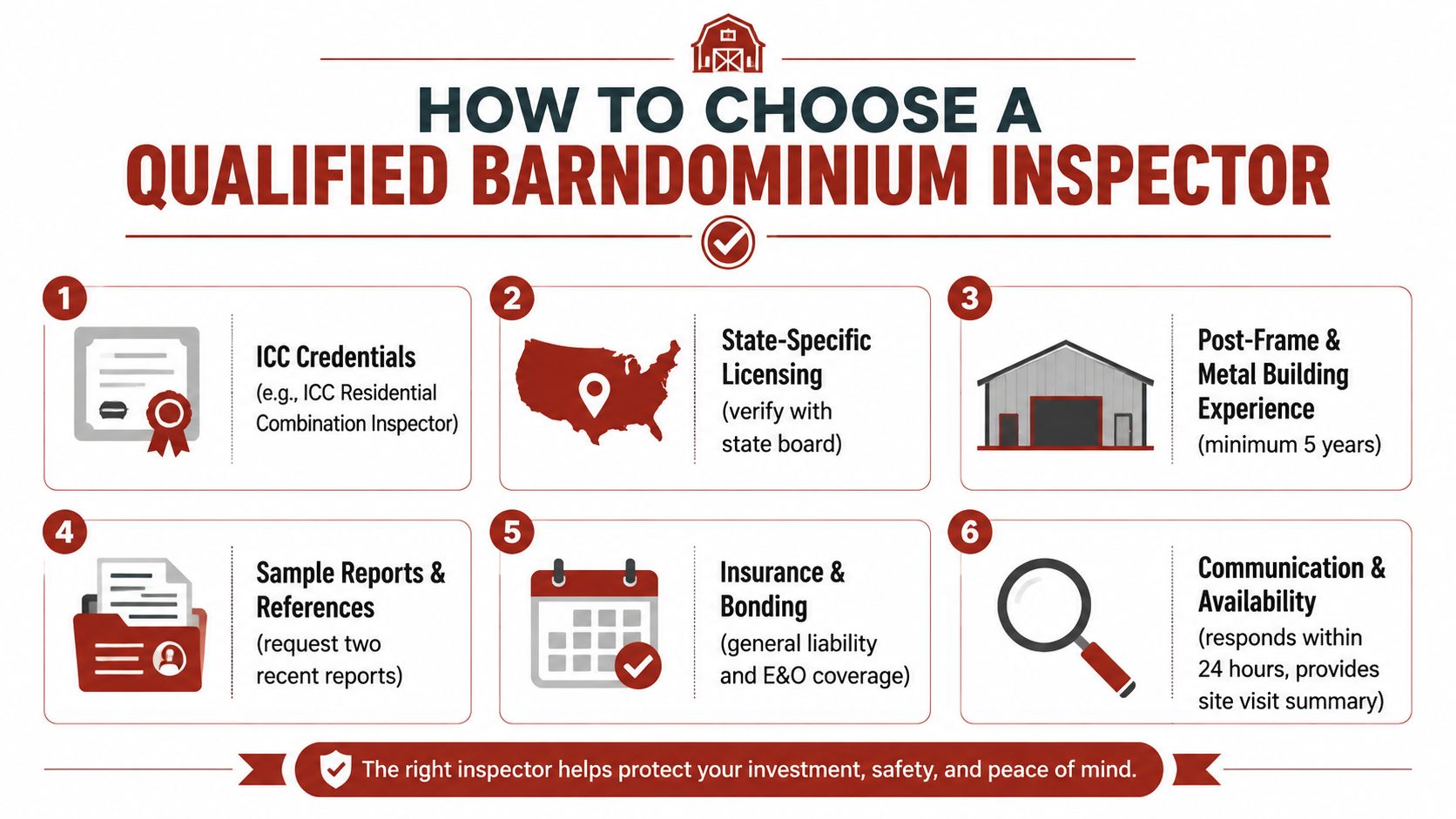
Credentials matter, but only if they match the job
Look for credentials that fit the project, not just a generic license. ICC-related knowledge is useful when code interpretation matters. State-specific licensing matters because local rules control what the inspector can legally do. For post-frame or metal building work, ask directly whether they've inspected similar structures, not just conventional houses.
You should also ask for sample reports. A strong report shows clear photos, plain language, and specific references to what was observed. If the sample report is vague, the actual one probably will be too.
Ask for evidence of real project experience
Don't settle for “I've inspected homes for years.” That doesn't tell you whether they've handled a barndominium, a metal building shell, or a post-frame structure with unique transitions and staging issues. Ask what they've seen go wrong in projects like yours, and listen for answers that sound specific rather than rehearsed.
A short reference call can tell you a lot. Ask whether the inspector caught issues early, whether the reports were usable, and whether the builder could work from the findings. If the references only praise personality and never mention documentation, keep looking.
Use this builder-side question set too: questions to ask before hiring a barndominium builder. The point isn't to merge the builder and inspector into one relationship. It's to make sure you're asking both parties the right questions before the first check clears.
Independence is not optional
A proper third party inspector is an independent inspection body reviewing stated requirements. That independence is what gives the report weight when a dispute starts. If the inspector is too closely tied to the builder, the buyer loses the whole benefit.
Ask who pays them, who they report to, and whether they carry professional liability coverage. If they dodge those questions, that's the answer.
The Liability Gap Most Buyers Overlook
Here's the part most guides gloss over. If an inspector misses a defect, or signs off on work that later fails, your recovery path may be messy, limited, or jurisdiction-specific. Buyers assume the inspector “owns” the result, but that's not always how private inspection oversight works in practice.
Louisiana officials recently pointed to the problem of weak oversight and regulation of private building inspectors, and that should make every buyer pay attention to the contract before they sign it. Public programs in places like Fairfax County and the DC Department of Buildings also show that certified third party inspections can be folded into formal permitting systems, which tells you the issue is governance, credentialing, and enforcement, not just the inspection itself. Coverage of private inspector oversight concerns
Don't assume the inspector absorbs your risk
If the inspector is wrong, the question is whether they have the coverage, documentation, and contractual structure to make that mistake meaningful. If they don't, you may still be left arguing with the builder, the municipality, or your own insurance carrier.
Protect yourself before the first site visit. Ask for proof of errors-and-omissions coverage, ask who the report is prepared for, and read the limitation language with a sharp eye. If the agreement says they're not responsible for anything outside a narrow visual review, then they've already told you how much you can rely on them.
Contract language should be plain and specific
Write down what happens if a defect is found, who gets the report, how fast re-inspection happens, and whether the inspector can return after correction. Make sure the agreement says what standards are being used, not just that “an inspection will be performed.” That difference matters when a dispute starts.
A buyer who cannot point to a written scope is usually the buyer who loses leverage.
The safest posture is to treat the inspector as a technical verifier, not a guarantor. The report should help you manage risk, but it doesn't magically transfer that risk away from you. If the contract is vague, the liability gap gets bigger, not smaller.
Fitting Inspections into Your Build Timeline and Contract
Inspections work best when the contract gives them teeth. If the builder can move past a critical milestone before your inspector has a chance to look, the process is mostly theater. Your agreement needs hold points that stop the next phase until the inspection is complete and the major findings are resolved.
Build the hold points into the payment schedule
Tie payment draws to inspection approvals. Not every draw needs a fight, but the high-risk stages do. Foundation work, framing, envelope closure, and pre-drywall rough-ins are the places where an independent check has real influence.
Hybrid workflows are becoming more common in adjacent industries. A 2024 whitepaper from the Consumer Bankers Association discusses hybrid appraisals that combine appraiser review with third-party inspections, which is a useful signal that layered verification is becoming normal, not exceptional. In construction, that translates into a practical mix of on-site visits and remote documentation when the stage allows it. Consumer Bankers Association hybrid appraisal whitepaper
Write the workflow so it's enforceable
The contract should say when the builder must notify you, how far in advance the inspector gets access, and what happens if an item fails. Don't leave those details to goodwill. Goodwill disappears fast when the project slips.
A better clause is simple: no concealment, backfill, or close-in work until the designated inspection is complete. That gives the inspector time to see the work while it still matters. It also prevents a builder from forcing a rushed sign-off just to keep the schedule moving.
Remote verification can help, but it shouldn't replace the critical site visit
Digital photos, video calls, and structured scheduling systems can support the process. They're useful when the inspector needs to confirm a detail quickly or review documents before travel. But remote tools are a supplement, not a substitute, for the milestones where physical verification matters.
Use the digital layer to improve coordination. Use the on-site layer to verify the work that can't be trusted to pictures alone.
Where to Find and Verify Local Inspectors
Start with your state licensing board, then check credential databases and local industry directories. That gives you a pool of people who are at least qualified on paper. After that, narrow the list by looking for direct experience with barndominiums, post-frame structures, metal buildings, or similar projects.
Build a short list, then verify it hard
Ask each candidate for two things, sample reports and a recent project example with a similar scope. Then compare those against local builder recommendations and independent credential sources. If a builder names an inspector quickly, that's useful. If the inspector's credentials don't line up with the builder's description, trust the credential source, not the sales pitch.
A practical place to start your builder research is BarndoBuilderList's near-me search, then cross-check any inspector referral separately. That keeps the builder shortlist and the inspector shortlist from collapsing into the same unverified circle.
Use a simple verification sequence
- Confirm licensing or certification with the relevant authority.
- Review sample reports for photo quality, specificity, and follow-up language.
- Ask for post-frame experience and similar project references.
- Verify insurance before you schedule the first visit.
- Match the scope to your build type, shell-only or turnkey.
That workflow is blunt on purpose. A qualified inspector should be easy to verify and hard to confuse with a generalist who's guessing. If the paperwork is slippery, move on.
If you're planning a barndominium and want a cleaner way to compare builders before you start calling inspectors, use BarndoBuilderList to build your shortlist first. Then take those names, verify their scope, and pair them with an inspector who can protect your money before the bad work gets buried.
- third party inspections
- barndominium construction
- building inspections
- construction quality
- inspector certification