Pole Barn Builders Oregon: Top 7 Companies for 2026
Discover the best pole barn builders Oregon has to offer. Our 2026 guide reviews top contractors, costs, and tips for choosing the right builder.
You're standing on a property line in Oregon, staring at a build that has to work in real weather, real permit rules, and a real budget. The quote you got sounds fine until you realize it might be for a shell, not a finished space, and the builder's service area might stop well before your county does. That's the trap most first-time buyers hit when they start searching for pole barn builders Oregon.
The fastest way through it is to stop treating every builder page like an equal option. Some firms are better for full-turnkey shops, some are stronger on equestrian layouts, and some are only a fit if they serve your micro-region and know the local permit path. This guide gives you a vetted shortlist of 7 Oregon builders and the practical lens to compare them, so you can narrow the field before you spend time on calls, site visits, and estimates.
Table of Contents
- 1. BarndoBuilderList
- 1. BarndoBuilderList
- 2. Morton Buildings
- 3. Locke Buildings
- 4. Oregon Pole Structures
- 5. Top Notch Pole Buildings
- 6. BBC Pole Barns
- 7. Water Tight Construction
- Top 7 Oregon Pole Barn Builders Comparison
- Next Steps How to Shortlist and Vet Your Builder
1. BarndoBuilderList
A shortlist is only useful if it helps you avoid dead ends. BarndoBuilderList does that by changing how you evaluate pole barn builders Oregon, not just by giving you names to call. It is a research-driven directory of 1,512 barndominium-friendly builders across all 50 states, and it ranks listings by visible website signals instead of paid placement or loose marketing language.
That matters because a polished contractor site can still hide weak fit. BarndoBuilderList gives you a cleaner first pass by sorting builders into confidence tiers based on whether they have dedicated barndo pages, repeated mentions, or at least one mention worth checking, then pairing those listings with concise profiles, scope tags, and source links. For a buyer, that cuts down the time spent guessing whether a company handles residential post-frame work and shifts the focus to the right candidates.
What it does well
- State and ZIP search: The ZIP code distance search helps you find nearby crews instead of assuming statewide coverage is real.
- Scope clarity: Profiles and buyer guides help you separate shell packages from turnkey work before you compare price.
- Independent filtering: Multi-page crawling and de-duplication reduce the noise that comes from duplicated listings and thin directories.
The directory is factual, not promotional. That helps if you are tired of contractor pages that look persuasive but never spell out what is included. It still leaves the final checks in your hands, though. You need to confirm service area, permit experience, structural scope, and whether the builder's advertised work matches the job you want built.
1. BarndoBuilderList
BarndoBuilderList belongs at the top because it changes the way you search, not just who you call. It's a research-driven directory of 1,512 barndominium-friendly builders across all 50 states, and it ranks listings by observable website signal, not paid placement or vague marketing claims. That matters when you're sorting through pole barn builders Oregon and need a cleaner starting point than a generic web search.
The platform's value is practical. It separates builders into confidence tiers based on whether they have dedicated barndo pages, repeated mentions, or at least one mention worth checking, then gives you concise profiles with scope tags and source links. For a buyer, that means less time decoding whether a company builds residential post-frame projects, and more time comparing the right candidates.
What it does well
- State and ZIP search: The ZIP code distance search helps you find nearby crews instead of assuming statewide coverage is real.
- Scope clarity: Profiles and buyer guides help you separate shell packages from turnkey work before you compare price.
- Independent filtering: Multi-page crawling and de-duplication reduce the noise that comes from duplicated listings and thin directories.
A useful thing to keep in mind is that the directory is factual, not promotional. That's good news if you're tired of glossy contractor pages that never say what's included. It also means you still need to verify licensing, insurance, references, and whether the builder handles your project type.
Practical rule: Use BarndoBuilderList to build your first shortlist, then call builders with the same scope language so you're comparing apples to apples.
The site also surfaces the kind of high-signal contractors buyers want to see, including profiles with strong review footprints like Advanced House Plans, Troyer Post Buildings, and ProStructures, but those are example profiles, not endorsements. If your project is a barndominium, a shop-home, or a hybrid residential build, this is the cleanest place to start before you invest time in direct outreach. Visit the platform at BarndoBuilderList.
Pros
- Nationwide, research-backed starting point
- ZIP-based distance filtering for local fit
- Scope tags and buyer guides that reduce early confusion
- Independent, buyer-first approach with no broker layer
Cons
- Listings are factual summaries, not endorsements
- You still need to verify license, insurance, references, and pricing yourself
- Some markets remain sparse
Website: BarndoBuilderList
2. Morton Buildings
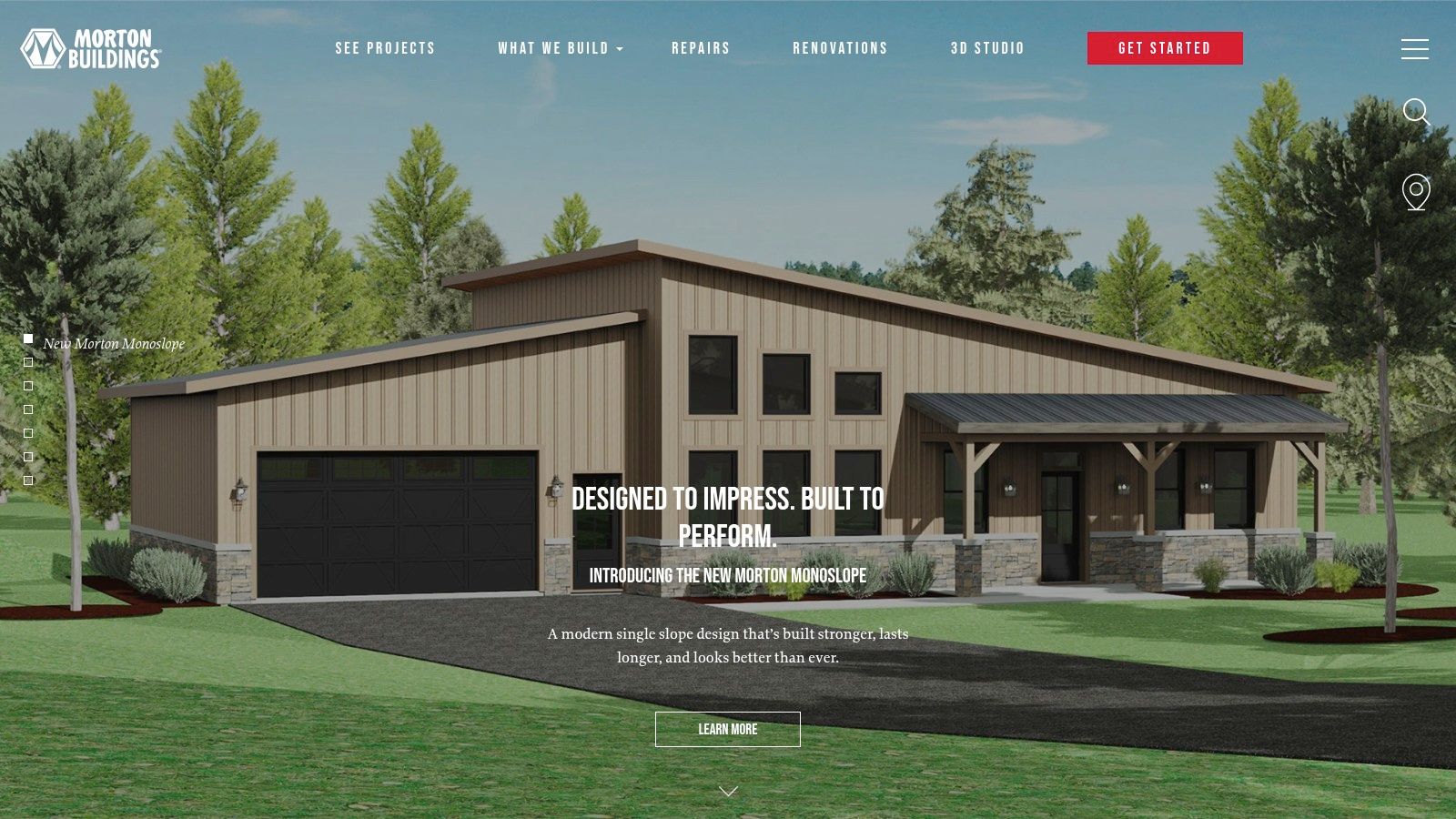
A buyer who wants a well-known post-frame company and a cleaner process will usually land on Morton Buildings early. For Oregon projects, that matters when the job has more moving parts than a simple shell, because an organized builder can reduce the number of decisions that get pushed back onto the owner. If you want a contractor that is used to handling engineered design and a predictable delivery path, Morton belongs in the comparison set.
The trade-off is straightforward. A larger firm usually brings a more polished process, but that can also mean less room to improvise once the scope is set. For a farm structure, an equestrian building, or a large shop, that structure can help keep the project on track. It can also push the price higher than a smaller regional crew might quote.
Key consideration
Morton makes the most sense when the project needs site-specific engineering, local snow and wind design, and a formal management structure. Buyers who want a cleaner handoff between design, materials, and construction tend to value that. Buyers who are chasing the lowest number on paper usually will not.
I look at companies like Morton as a risk-control option. That matters when the site is difficult, the footprint is larger, or the owner wants fewer subcontractor handoffs to manage. If the job is simple and price is the main filter, a premium builder can feel unnecessary. If the job has room to go sideways, the extra structure is easier to justify.
I'd use Morton as a benchmark bid. Even if you choose someone else, their scope can show whether a lower-priced proposal leaves out engineering, site work, or finish coordination.
Pros
- Strong reputation for engineered post-frame work
- Broad scope across agricultural, equine, shops, and commercial
- In-house crews and project management can reduce coordination friction
Cons
- Usually a premium-priced option
- Demand can affect scheduling
Website: Morton Buildings
3. Locke Buildings
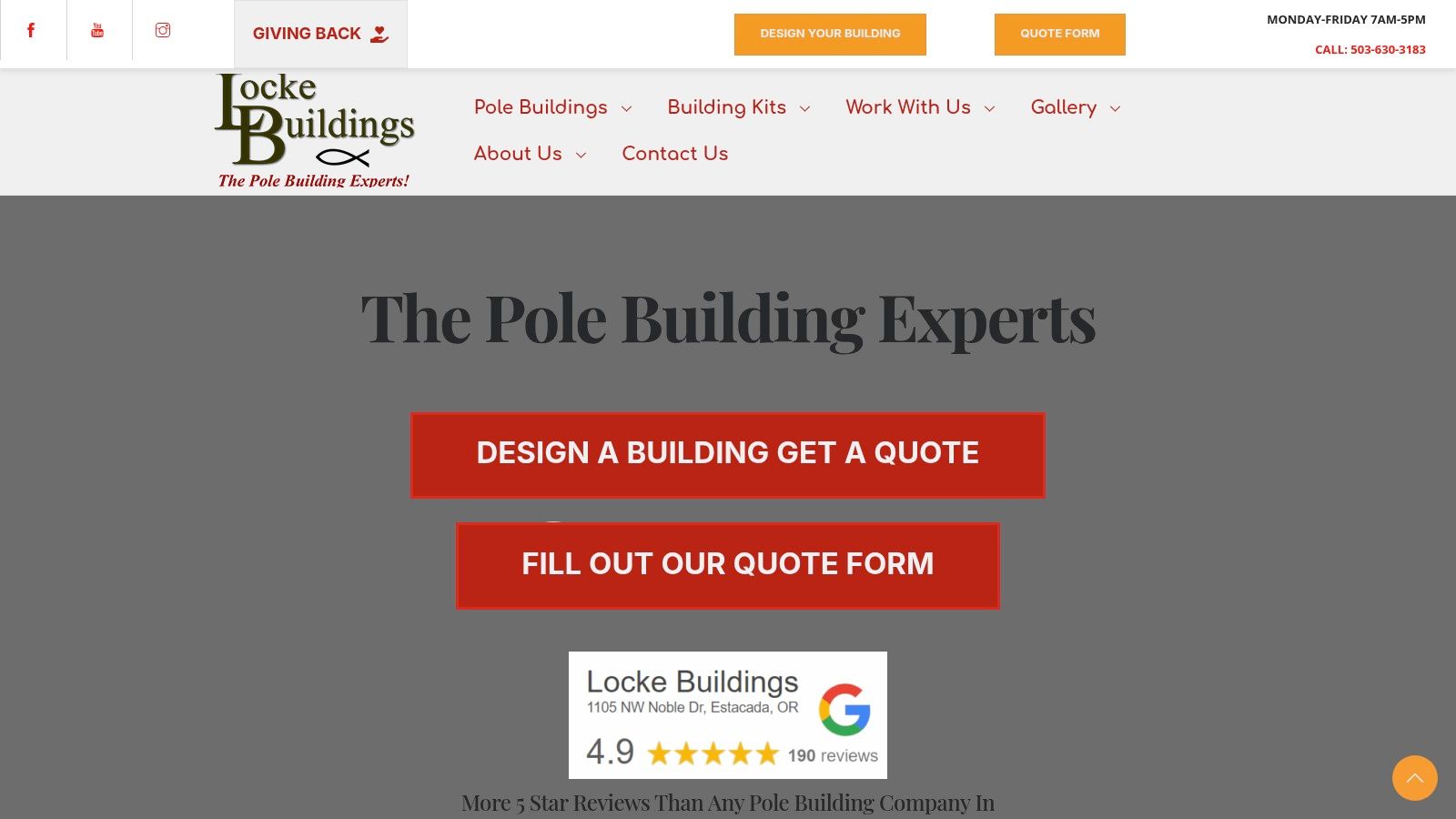
A buyer comparing pole barn builders Oregon usually runs into a familiar problem, the brochure looks good, but the key question is how much of the job the builder owns. Locke Buildings is a strong comparison point because it offers both full design-to-build service and a kit path. That split matters in Oregon, where one owner may want a single accountable contractor and another may already have a crew in place.
Locke also fits projects that are bigger than a simple shell. Once the plan grows into a barn, shop, or multi-use building, the hard parts are often layout, site access, and county permitting, not the frame package itself. A builder that can stay involved through those decisions reduces the chance of costly rework later.
Where the trade-off shows up
The kit option can work well for owner-builders or buyers who already trust their subcontractors. It gives you more control over labor and scheduling, and that can keep the budget tighter on paper. The trade-off is coordination. If the wrong crew handles site prep, erection, or finish work, the savings can disappear fast.
Full-service delivery is easier to manage because one team is carrying more of the scope. That convenience usually shows up in the final price, so the buyer needs to decide whether less coordination is worth the extra cost. For a first-time owner, that question matters more than the brand name.
For buyers working in the Portland area, or anywhere a regional company with Oregon experience makes sense, Locke deserves a direct look. Locke Buildings on BarndoBuilderList helps connect the company name to a location-based shortlist, which is useful before you start asking for bids. The Locke Buildings website gives you the company's own service overview, while the project image below shows the type of post-frame work they present publicly.
Pros
- Full design-to-build services plus kit options
- Good fit for arenas, shops, garages, and agricultural structures
- Useful for buyers who want flexibility in how the project is delivered
Cons
- Peak-season lead times can stretch
- Kit route shifts more responsibility to the owner if subcontractors are managed separately
Website: Locke Buildings
4. Oregon Pole Structures
A buyer with a Central Oregon site often learns quickly that distance, weather exposure, and access can change the job more than the brochure suggests. Oregon Pole Structures fits that kind of project. It serves the Sisters, Redmond, and Bend area, and that local footprint matters because the build assumptions in the high desert are different from what works on the coast or in the Valley.
The company is a practical call if you need equestrian awareness and a builder who understands how a shop or barn has to function day to day. Horse barns, riding spaces, and storage-heavy layouts all ask for clear traffic flow, durable framing choices, and enough planning to keep the structure useful after the crew leaves.
A local builder can still miss the mark if they treat your site like a generic slab. Oregon's climate, permitting, and access issues vary widely, and a serious contractor should be able to explain how those differences affect framing, drainage, and scheduling. That kind of fit matters more than a polished sales pitch.
For a buyer in Central Oregon, Oregon Pole Structures is one of the clearer names to call early. For someone on the coast or in the far northeast, the focused service area may make it a less practical option. The internal route through BarndoBuilderList's Oregon builder page can help you confirm that regional fit before you request bids.
Good fit signal: If a builder can talk plainly about site access, local conditions, and code expectations without being prompted twice, that usually points to a contractor who understands the work.
Pros
- Direct Central Oregon presence
- Equestrian-friendly layouts and regional execution
- Good match for high-desert site conditions
Cons
- Limited geographic reach outside Central Oregon
- Portfolio is more regionally concentrated
Website: Oregon Pole Structures
5. Top Notch Pole Buildings
A buyer looking at a Central Oregon build often needs more than a name on a list, they need a builder who will stay involved when the project stops being simple. Top Notch Pole Buildings fits that kind of job. It focuses on custom pole barn, garage, shop, and equine work, so the company is a reasonable call for owners who want direct attention instead of a large regional operation pushing the job through several layers.
That smaller scale can work in your favor if you are a first-time owner and want the person quoting the project to stay close to the details. You usually get clearer communication and faster answers on scope questions. The trade-off is capacity. A smaller crew can be booked out, and that matters if your schedule is tight or if you need a builder who can start several jobs at once.
For this kind of firm, the test is not the sales pitch, it is whether the conversation gets specific. A serious builder should be able to explain how your site affects grading, access, and build order, then connect that back to the structure you want. If the discussion stays generic, that is a warning sign. If it turns into a practical plan, the fit is better.
BarndoBuilderList's site prep signals are useful here because they help separate a polished website from a builder who can handle real ground conditions. That matters on rural Oregon parcels, where uneven access, drainage, and layout choices can change the whole job.
Pros
- Personalized attention from a smaller firm
- Strong niche fit for equestrian and residential shop projects
- Good choice for Central Oregon buyers who want direct service
Cons
- Limited reach outside the region
- Smaller team can mean fewer simultaneous starts
Website: Top Notch Pole Buildings
6. BBC Pole Barns
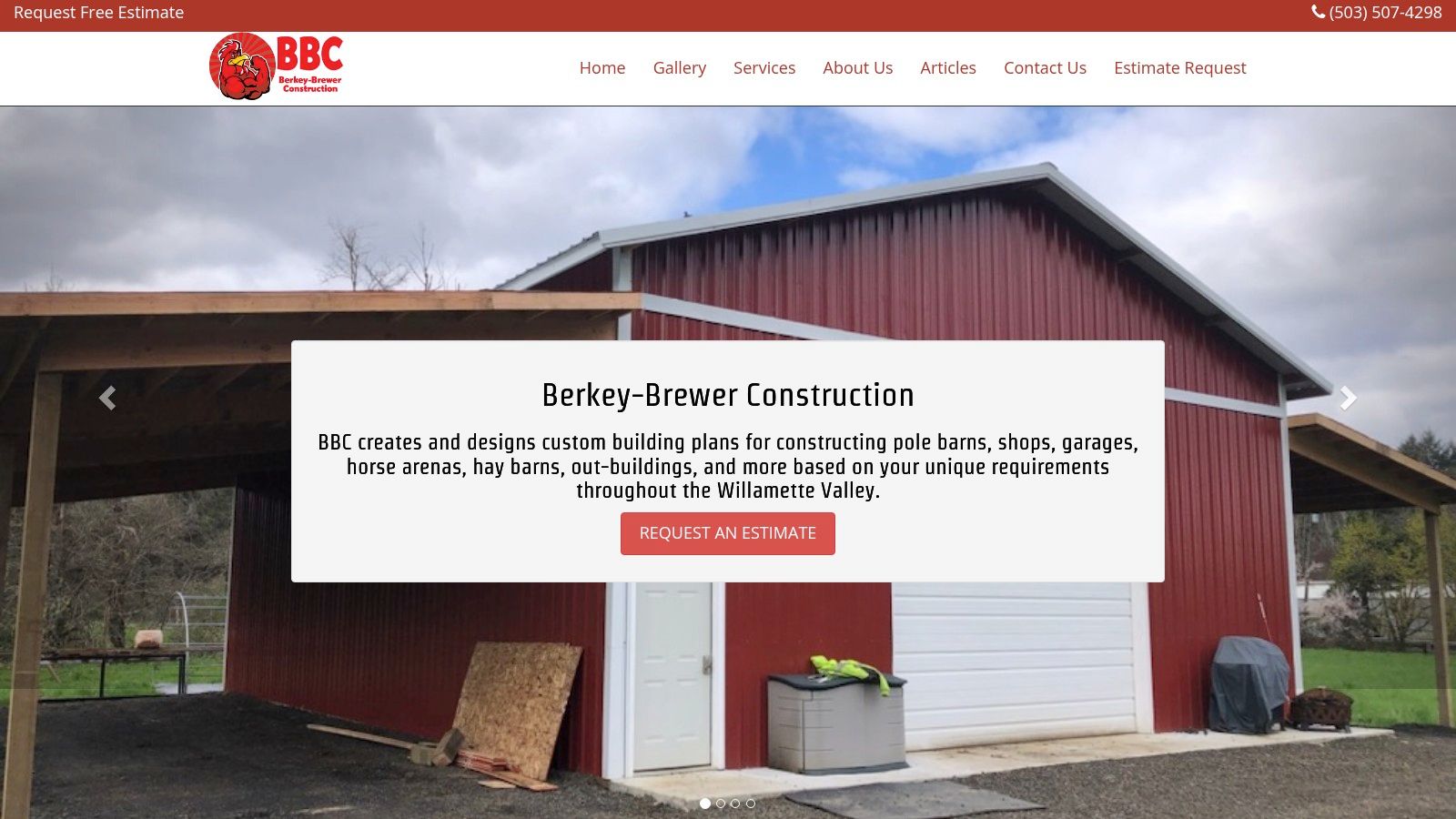
A Willamette Valley project usually rewards the builder who can keep scope tight and decisions practical. BBC Pole Barns fits that kind of job well, especially for owners who need barns, shops, garages, hay barns, or horse arenas and want one crew to handle design and build together. That mix is useful because many Oregon buyers are not shopping for a single-use utility shell, they need a building that can support storage, animals, and daily work without overcomplicating the plan.
Local familiarity is a significant advantage. A builder who works the Valley regularly is more likely to understand permit timing, site limits, and the way rural parcels behave differently from suburban lots. That affects everything from access to sequencing, and it can keep a project from stalling on details that should have been addressed early.
Scope is where bids get messy.
A shop, an arena, and a hay barn may all sit under the pole barn label, but they become different jobs once you sort out doors, clearances, utilities, and finish work. If you are comparing quotes, the line items need to match closely or the lowest number will not mean much. Use the same checklist for each builder, then see who explains the differences clearly and who stays vague.
For first-pass research, BBC is a reasonable fit if you want a local crew and a project gallery that reflects Oregon use cases. It is less helpful if you need published pricing that does most of the sorting for you, because the better comparison will come from direct scope conversations. BBC Pole Barns is the kind of site you check first, then verify against the actual buildings, not the marketing copy.
A practical test helps here. Ask for the last two or three builds that match your intended use, then compare those projects against your own needs. That gives you a clearer read on fit than a polished homepage photo ever will.
Ask for the last two or three builds that most closely match your intended use, not the prettiest gallery photo. That tells you more about real fit than a polished homepage ever will.
Pros
- Good Willamette Valley knowledge
- Range of project types from ag use to storage and hobby buildings
- Useful project gallery for visual comparison
Cons
- Primarily Valley-focused
- Pricing transparency is limited online
Website: BBC Pole Barns
7. Water Tight Construction
Water Tight Construction is the coastal pick on this list, and that matters more than many buyers realize. Coastal Oregon brings its own mix of wind, rain, corrosion exposure, and site constraints, so a builder working out of Astoria has a real advantage for owners on the North Coast. If your search for pole barn builders Oregon is really a search for someone who understands coastal conditions, this is a practical name to know.
The company also makes sense for smaller accessory structures, sheds, garages, and modest barns. That narrower scope is not a weakness if your project is straightforward. In fact, for many coastal owners, a smaller local builder is exactly what they need.
Coastal fit beats generic statewide claims
A lot of builders will say they serve Oregon. That doesn't tell you much. What matters is whether they have the knowledge to build in your county, on your soil, with your exposure. Water Tight's local presence is the key signal here, especially if you want faster site visits and more realistic coordination.
For buyers who are comparing not just builders but project scope, the BarndoBuilderList tag for site prep in Oregon is worth checking because coastal jobs often live or die on the early groundwork. If the site work is wrong, the rest of the build gets harder and more expensive.
Pros
- Useful for Clatsop, Columbia, and Tillamook County owners
- Stronger fit for coastal exposure and local coordination
- Good for storage, hobby, and smaller ag uses
Cons
- Not a statewide full-service operator
- Large equestrian or arena projects may be out of scope
Website: Water Tight Construction
Top 7 Oregon Pole Barn Builders Comparison
| Product | Offering & Reach | Complexity 🔄 | Resource Needs ⚡ | Expected Outcomes 📊⭐ | Ideal Use Cases 💡 |
|---|---|---|---|---|---|
| BarndoBuilderList | Nationwide research-backed directory (1,512 builders across 50 states) | Low for users; high editorial research behind the scenes 🔄🔄 | Minimal for users, web access and review time; no pricing/quotes integrated ⚡⚡ | Defensible, ranked shortlist and faster early due diligence 📊⭐ | Early-stage buyer research, shortlist generation, ZIP-code/state searches 💡 |
| Morton Buildings | National post-frame manufacturer/installer; engineered custom builds | High, site-specific engineering, in-house crews, warranty processes 🔄🔄🔄 | Resource‑intensive: premium pricing and longer lead times; strong project management (lower speed) ⚡ | Engineered, warrantied buildings with durable performance and predictable outcomes 📊⭐ | Large agricultural/commercial/residential projects where warranties and engineered designs matter 💡 |
| Locke Buildings | Regional high-volume contractor (Oregon/Washington); design-to-build + kit options | Moderate, full services plus kit coordination; requires client decision on route 🔄🔄 | Moderate: budget varies by route; kits may need subcontractors; online intake speeds scoping ⚡⚡ | Proven regional builds with high review volume and flexible delivery models 📊⭐ | Statewide equestrian/ag projects, DIY kit buyers, clients wanting quicker scoping 💡 |
| Oregon Pole Structures | Central Oregon post-frame specialist; equestrian and high-desert expertise | Moderate, tailored local designs for snow/load and site conditions 🔄🔄 | Moderate: local contractor presence and cost-efficient approaches; regional limits on reach ⚡⚡ | Cost-efficient, locally tuned builds optimized for high‑desert conditions 📊⭐ | Central Oregon horse barns, arenas, and owners seeking regional expertise and value 💡 |
| Top Notch Pole Buildings | Boutique Central Oregon direct builder; equine and shop builds | Lower-to-moderate, personalized, smaller-scale project management 🔄🔄 | Lower scale: flexible budgets but fewer simultaneous starts; localized coordination ⚡⚡ | Personalized, attention-focused builds with strong local fit 📊⭐ | Owners wanting bespoke equestrian or shop projects with hands-on service 💡 |
| BBC Pole Barns | Willamette Valley design-and-build contractor with project gallery | Moderate, design, permitting, and local crew coordination 🔄🔄 | Moderate: local permit familiarity reduces friction; travel surcharges outside core area ⚡⚡ | Locally compliant, varied project types executed reliably across the Valley 📊⭐ | Willamette Valley ag/hobby barns, arenas, and county-permit-dependent projects 💡 |
| Water Tight Construction | North Coast (Astoria) coastal specialist; corrosion and wind detailing | Moderate, specialized detailing for coastal exposure and permitting 🔄🔄 | Moderate: corrosion-resistant materials and coastal coordination may raise costs ⚡⚡ | Weather-resistant small-to-medium buildings optimized for coastal conditions 📊⭐ | Coastal owners needing high-wind/rain detailing and corrosion-resistant solutions 💡 |
Next Steps How to Shortlist and Vet Your Builder
The best shortlist starts with fit, not flair. Use BarndoBuilderList to separate builders with real web signal from builders with thin, generic pages, then narrow your choices by region, project type, and whether the company handles shell, turnkey, or kit-based work. That first filter saves you from wasting calls on firms that were never a real match.
Your next move is to contact your top 2 or 3 builders with the same scope language. Ask whether the quote includes engineering, site prep, utilities, insulation, interior finish work, and permit support, or whether those items are separate. That question matters because a low shell price can look attractive until the missing work shows up later.
Then verify the basics. Check the contractor's license, ask for recent Oregon references, and make sure the builder has experience in your specific county or region. Oregon is not one uniform market, and a coastal build, a Bend-area build, and a Valley build can all require different assumptions.
Use the cost guide data as a reality check, not as a promise. A typical Oregon pole barn is estimated at $29,000, with a guide range of $16 to $48 per square foot, and larger contractor-built projects can climb quickly, including a 40x80 building at roughly $51,200 to $153,600 and a 60x100 building at about $96,000 to $288,000 according to the Oregon cost guide linked earlier. That's why scope clarity matters more than chasing the lowest headline quote. The same guide also notes a typical build can take 2 to 6 weeks and that permits are usually required, so budget both construction and admin lead time from the start.
Bottom line: The right Oregon builder is the one who can prove local fit, explain scope cleanly, and show you a project history that matches your use case.
If you're serious about a pole barn or barndominium in Oregon, start with the evidence, not the marketing. Build your shortlist, compare scope side by side, and only then decide who gets your site plan.
BarndoBuilderList gives you a cleaner way to start that process, with researched builder profiles, scope tags, and state or ZIP-based search tools built for buyers who need real options fast. If you're comparing pole barn builders Oregon and want a shortlist that reduces guesswork, visit BarndoBuilderList and use it to narrow your first calls with more confidence.
- pole barn builders oregon
- oregon barndominiums
- post frame oregon
- custom pole barns
- barndo builders