Due Diligence Review Checklist: 8 Barndo Checks
Follow this due diligence review checklist to verify barndominium builders, site, permits, scope and contracts before signing.
You've found land you like, a floor plan that fits, and a builder who talks like he can start next month. The quote looks workable, the photos look great, and the pressure to lock in pricing is real. That is exactly when most barndominium problems begin, not with bad framing, but with a missing license, a vague shell scope, or a parcel that was never legal for a residence in the first place.
Don't sign on trust alone. Work through this due diligence review checklist in order, before you put down serious money. The sequence matters because early checks can kill a bad deal cheaply, while late discoveries get expensive.
History backs that discipline. Bain & Company's research on large transactions found that only 25% of acquirers outperformed their peer index by more than 10 percentage points between 1995 and 1998, improving to 45% between 2002 and 2005, while approximately half of deals valued above $250 million still failed to deliver their promised returns. Different market, same lesson. Management projections, glossy photos, and confident sales talk don't replace independent validation.
For a barndo, validation is practical. Record each request, who owns it, what evidence you received, what's still unresolved, and the deadline for a decision. Treat your checklist as a risk register, not a file collection exercise.
Table of Contents
- 1. Verify Contractor Licensing and Registration
- 2. Confirm Insurance Coverage and Limits
- 3. Check References, Completed Projects, and Online Reputation
- 4. Clarify Shell Versus Turnkey Scope in Writing
- 5. Assess Financial Stability and Payment Practices
- 6. Verify Permits, Zoning, and Structural Code Compliance
- 7. Review Contract Terms, Change Orders, and Warranties
- 8. Inspect Construction Quality and Site Conditions
- 8-Point Contractor Due Diligence Checklist Comparison
- Turn Your Checklist Into a Signed, Build-Ready Deal
1. Verify Contractor Licensing and Registration
Start with the legal identity, not the truck logo. Search the state licensing board using the exact legal business name and the owner's name, not just the trade name on the website. Requirements vary widely. Some states require a general contractor license for residential work, some register home improvement contractors, and some exempt certain agricultural or owner-built structures.
What to Record Before You Call
Log the license number, expiration date, and classification in your project file. Then ask which license covers your specific scope, shell only or turnkey. A license that's valid for pole barns doesn't automatically authorize a finished residence.
One buyer found an active license with a recent complaint on record and used that to push for tighter payment and dispute terms. Another owner-builder confirmed which exemptions applied before ordering a metal shell, avoiding a permit problem later. That's the trade-off. This check takes minutes, but unlicensed work can complicate permits, insurance claims, lender draws, and resale.
Practical rule: If the builder can't tell you, in writing, which license or registration covers your county and your scope, pause. Don't let him clarify it after you've signed.
Check both state and county requirements for the project location. If the builder works across state lines, verify where the building sits, not where his office sits.
2. Confirm Insurance Coverage and Limits
"Licensed and insured" on a website means almost nothing. Get certificates, then verify them directly with the insurer or agent, not only from copies the builder hands you. A certificate with an expired policy period is a warning sign, not paperwork to file and forget.
For a hybrid build with steel, post-frame work, interior trades, and possibly owner-supplied labor, you need to separate the coverages. Current construction risk guidance from IRMI emphasizes strong subcontractor qualification and tight subcontract agreements that transfer risk appropriately, and builders risk underwriting may require a line-item budget, detailed schedule, soils information, site plan, and documented fire, water, hot-work, wildfire, or hurricane controls.
Questions That Expose Gaps
- General liability and workers' compensation: Confirm limits against total contract value and lender requirements, and ask to be named as additional insured where appropriate.
- Builders risk: Confirm who carries it, what project value it covers, and whether materials stored off-site are included.
- Subcontractors: Get their certificates too, or written proof they're covered under the builder's policies.
- Exclusions: Ask about defective work, owner-builder activity, theft, weather damage, and injuries to owner-helpers.
One lender refused the first draw until builders risk named both owner and lender. That's common, and it's better to learn it before mobilization. Request updated certificates at each phase.
3. Check References, Completed Projects, and Online Reputation
A builder's gallery shows you his best day. References show you his worst month. Ask for recent clients, visit finished barndominiums if you can, and prepare the same questions for each one so you can compare answers on schedule, budget, change orders, communication, and warranty response.
Use this list of questions to ask a barndominium builder to structure those first calls, then go beyond it. Ask specifically about shell versus turnkey delivery, weather delays, permit problems, and material shortages. Vague praise is less useful than a detailed story about how a problem got fixed.
Look for Patterns, Not Outliers
Cross-check review platforms, the Better Business Bureau, state complaint databases, and court records. A buyer who visited two finished homes in a similar climate spotted poor roof flashing on one and asked pointed questions about installation practices. Another found repeated complaints about unreturned deposits and walked away. An owner-builder checking a shell supplier learned about delivery delays before placing the order.
The broader lesson is familiar from larger deals. Bain's 2019 survey reported in Wharton coverage found that almost 60% of senior executives attributed unsuccessful deals to poor due diligence that failed to identify critical issues. For you, critical issues hide in patterns across independent sources, especially recent negative reviews and whether the builder responded and resolved them.
Use directories such as BarndoBuilderList to build a shortlist, then verify each candidate yourself. A directory gets you to the call. It doesn't replace the call.
4. Clarify Shell Versus Turnkey Scope in Writing
Two bids for the same size barndo can look wildly different for one simple reason. One includes insulation, interior framing, and HVAC, and the other doesn't. If you compare totals without comparing scope, you're not comparing bids. You're comparing guesses.
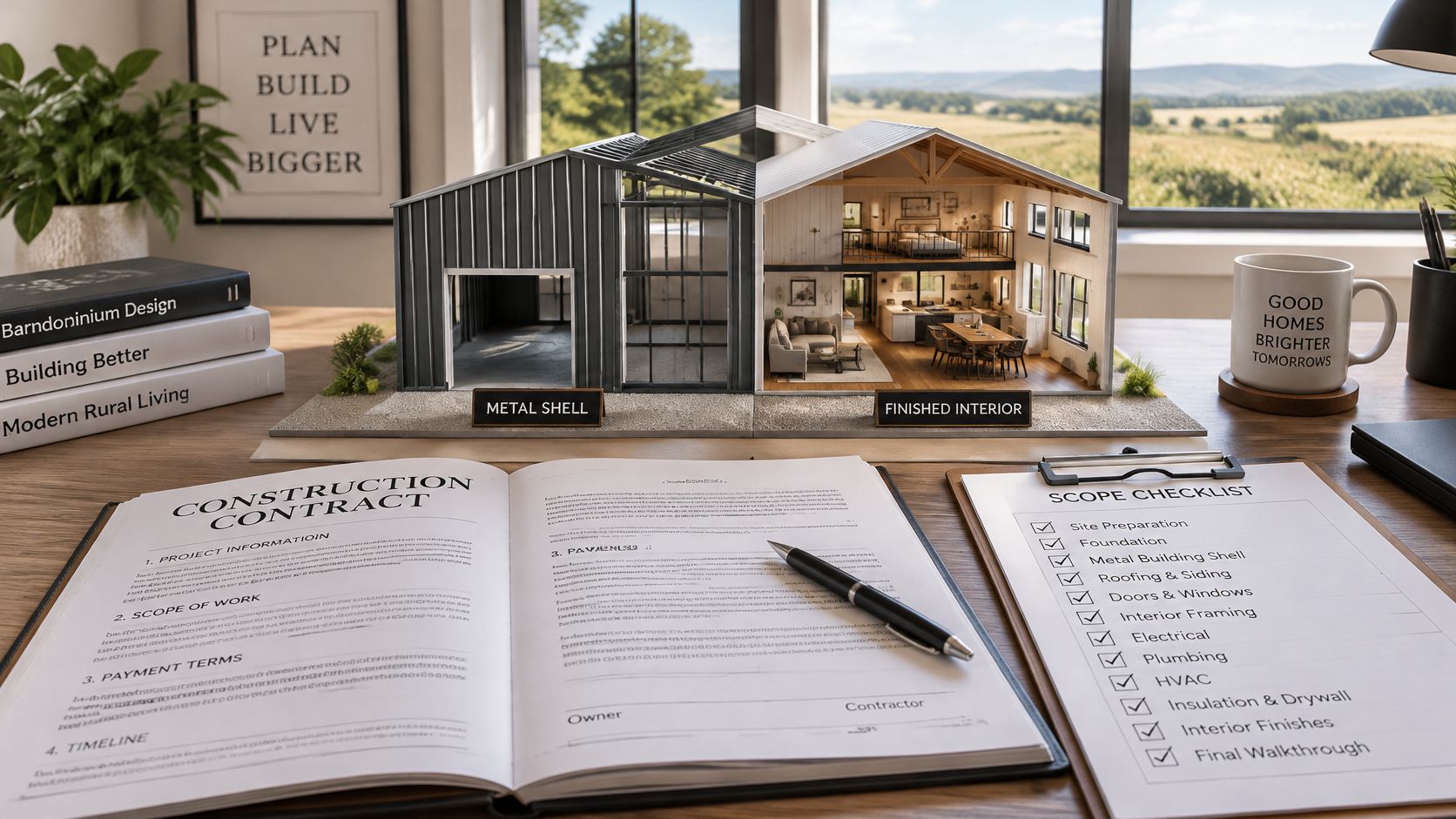
Build a side-by-side scope matrix for every bid. List included, excluded, and allowance items line by line. Foundation, frame, roof, exterior walls, doors and windows, insulation, interior framing, electrical, plumbing, HVAC, finishes, septic connection, driveway, and cleanup should each have a named owner.
Define the Words in the Contract
Make the builder define shell, turnkey, and move-in ready in writing. Those words mean different things to different builders, which is why this guide to turnkey barndominium builders is worth reviewing before you assume turnkey means you can move furniture in on closing day.
Confirm foundation type, roof load ratings, and insulation R-values in the specifications. Request allowances with dollar amounts and a written process for exceeding them. One owner-builder ordered a metal shell and later paid separately for foundation design, concrete, and trusses that weren't clearly in the supplier quote. A scope matrix would have caught that in an afternoon.
5. Assess Financial Stability and Payment Practices
A talented builder who's short on cash can still leave you with liens. If he doesn't pay a metal supplier or concrete sub, that unpaid party may file a mechanic's lien against your property even though you already paid the builder. Your payment structure is your protection.
Start with baseline identity and stability checks, then escalate when you find complexity or adverse history. A 2025 global practitioner survey on third-party due diligence found that 72% check corporate registration and financial stability and 61% review litigation or regulatory history, while only 35% identify ultimate beneficial owners. Apply the same tiered logic. Verify registration, years in operation, and public records first. Dig deeper if ownership is murky or records raise questions.
Protect Every Draw
- Search public records: Check county recorder and court records for liens and judgments under the builder's legal name.
- Limit upfront money: Keep deposits reasonable and tie later payments to completed, inspected milestones.
- Collect lien waivers: Require waivers from subcontractors and major suppliers with each payment, as many lenders do.
- Ask directly: Require disclosure of open disputes with subs or suppliers before signing.
One buyer found a recent lien from a metal supplier and demanded proof of payment before releasing the next draw. That's not distrust. That's how the system is supposed to work.
6. Verify Permits, Zoning, and Structural Code Compliance
A barndominium-friendly builder doesn't make your parcel buildable. Zoning, septic, access, and floodplain rules can stop a project that looks perfect on paper, and a builder's verbal assurance isn't approval. Get written confirmation from the planning, building, health, and utility authorities who control the site.
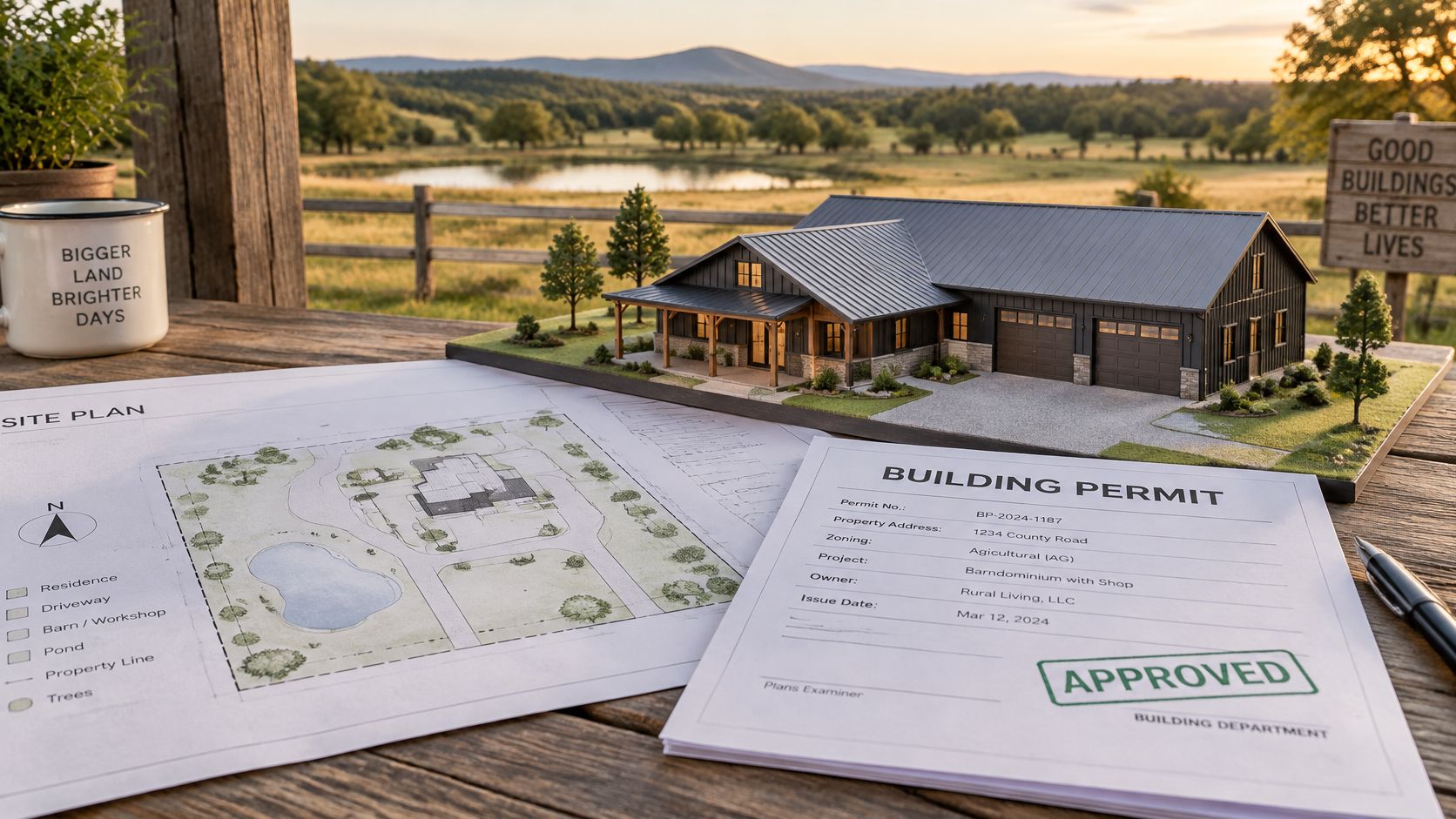
Permitting isn't a minor step you squeeze in later. An analysis of Arizona residential projects found the typical project took approximately 319 days from permitting through vertical construction and final inspection, with post-reform timelines still ranging from roughly 150 to 290 days. Your county will differ, but the point holds. Start this conversation before you buy land or sign a construction contract.
Your Parcel-Level Checks
Contact local planning or zoning first. Confirm residential occupancy is allowed, minimum dwelling size, setbacks, and whether post-frame or metal construction is accepted for a home. One buyer learned the county classified the planned structure as agricultural, requiring a change of use before anyone could live in it.
Ask who pulls permits and whether stamped engineering is in the price. Confirm wind, snow, and seismic design for your site, plus septic, well, driveway, and utility approvals. When you're screening builders, candidates tagged for permitting and inspections are a useful starting point, but the county's answer outranks any tag.
7. Review Contract Terms, Change Orders, and Warranties
Most barndo disputes I've seen described by frustrated owners aren't really about craftsmanship. They're about a contract that never defined scope, never priced changes in advance, or paid for work that hadn't happened yet. Read the full agreement, and have an attorney or qualified construction contract reviewer read it too.
Your contract, scope matrix, and schedule of values must match. If the matrix says insulation is included and the contract is silent, the contract wins in a dispute. Fix the mismatch before signing, not during the build.
No written, signed, priced change order means no changed work. If it's not approved before the work starts, don't pay for it after.
Clauses Worth Negotiating
- Payment schedule: Tie every draw to measurable progress and inspections, not calendar dates.
- Change orders: Require written approval, especially above a set amount you define together.
- Timeline and remedies: State start conditions, milestones, delay handling, dispute resolution, and termination rights.
- Warranties: Get separate written warranties from the builder and major manufacturers, and check conditions.
That last point matters more than buyers expect. One owner-builder discovered roof coverage depended on installation by a certified installer and added that requirement to the contract. A manufacturer warranty you void on day one isn't protection.
8. Inspect Construction Quality and Site Conditions
Due diligence doesn't end at signing. It changes form. Now you're verifying that what's built matches approved drawings, engineering, and the scope you paid for, while defects are still cheap to fix.
Schedule independent inspections at foundation, framing, dry-in, and pre-finish stages. An inspector who catches undersized anchor bolts before framing saves you a structural argument later. A flashing check before drywall can prevent the leak you'd otherwise find after move-in. Take dated photos of concealed work before it's covered, every time.
Watch how this builder walks a site and explains quality checks in practice.
Keep the Record Clean
Request written inspection reports and track corrective actions to completion, with a named owner and date for each item. Don't rely on software or photos alone to make the judgment call. KPMG's 2025 survey of 851 organizations found that 50–58% reported using AI in some third-party-risk processes, but only 22% considered it "very effective" while 40% rated it merely "somewhat effective". Tools can organize evidence and flag changes. A qualified human still needs to accept or reject the work.
Check drainage and moisture control as carefully as framing connections and panel installation. Water does more long-term damage to barndos than almost any other oversight, and it's easiest to prevent before finishes go on.
8-Point Contractor Due Diligence Checklist Comparison
| Due-Diligence Check | 🔄 Complexity & Resources | 📊 Expected Outcome | Ideal Use Case | ⭐ Key Advantage |
|---|---|---|---|---|
| Verify Contractor Licensing and Registration | Low; public licensing databases and local requirements | Confirms authorization, license status, and recorded discipline | Before signing or confirming who can pull permits | ⚡ Quick, low-cost screen for unauthorized builders |
| Confirm Insurance Coverage and Limits | Moderate; obtain current certificates and verify directly with insurers | Confirms relevant coverage, limits, and policy periods | Before work begins and at project milestones | Reduces exposure to injury, property damage, and construction risks |
| Check References, Completed Projects, and Online Reputation | Moderate; contact clients, visit sites, and review independent sources | Reveals workmanship, communication, schedule, and complaint patterns | Comparing shortlisted builders with similar project experience | 💡 Cross-checks marketing claims against real projects |
| Clarify Shell Versus Turnkey Scope in Writing | Moderate to high; detailed specifications and bid comparison | Defines inclusions, exclusions, allowances, and buyer responsibilities | Comparing bids or ordering a shell package | Reduces scope gaps and unexpected costs |
| Assess Financial Stability and Payment Practices | Moderate; public-record searches and review of payment terms | Identifies potential cash-flow, lien, and completion risks | Before deposits and throughout progress payments | Supports milestone-based payments and lien protection |
| Verify Permits, Zoning, and Structural Code Compliance | Moderate to high; local agency checks, engineering, and permit review | Confirms legal residential use, code requirements, and approval path | Before buying land, finalizing plans, or starting construction | Helps prevent rework, fines, or occupancy delays |
| Review Contract Terms, Change Orders, and Warranties | High; full contract review, often with legal advice | Sets enforceable expectations for cost, schedule, changes, and remedies | Before signing and whenever contract terms change | ⭐ Clarifies responsibilities and reduces disputes |
| Inspect Construction Quality and Site Conditions | Moderate; independent inspections at key stages and written reports | Finds defects early and documents compliance with plans | At foundation, framing, dry-in, and pre-finish stages | ⚡ Early corrections can limit repair costs and delays |
Turn Your Checklist Into a Signed, Build-Ready Deal
A checklist only helps if it ends in decisions. For each builder on your shortlist, you should be able to open one file and find the license record, verified insurance certificates, reference notes, scope matrix, financial and lien checks, permit and zoning confirmations, the reviewed contract, and the inspection plan. If a folder has gaps, those gaps are your next calls, in order.
Sequence is where buyers save the most money. Verify licensing and insurance before you invest hours in design meetings. Confirm the parcel can legally support a residence before you pay for stamped plans. Lock shell versus turnkey scope before you compare prices, and tie every payment to inspected milestones and lien waivers after you sign. Each step filters risk while walking away is still cheap.
Be honest about the trade-offs, too. Thorough verification takes time, and good builders are busy. Some will push back on detailed scope matrices or direct insurer confirmation. That pushback tells you something useful. A builder who builds well and runs a clean business can usually produce a license number, a current certificate, recent references, and a written exclusions list without drama. A builder who treats basic questions as insults is showing you how he'll handle a real problem mid-build.
Your Final Pass Before Signing
- Licenses and insurance: Active, verified directly, and matched to your scope and county.
- Scope and money: Matrix, allowances, payment milestones, and lien waiver process all in writing.
- Site legality: Zoning, permits, septic, utilities, and structural design confirmed with the authorities, not just the builder.
- Contract protection: Change order rules, warranties, dispute process, and termination rights reviewed by a professional.
- Quality control: Inspection stages scheduled, photo records planned, and corrective actions tracked to completion.
Use BarndoBuilderList to build your initial shortlist by state or ZIP code, then run every candidate through this same sequence so you're comparing evidence, not marketing. Keep your due diligence review checklist current as answers come in, note who verified each item and when, and don't let a deadline, deposit special, or friendly sales pitch move you past an unresolved item. The goal isn't to find a builder with no imperfections. It's to sign with your eyes open, with price, scope, and risk documented well enough that surprises stay small.
Start your shortlist with BarndoBuilderList, where you can search barndominium-friendly builders by state or ZIP code and review scope tags, focus notes, and source links before you call. Then run each candidate through the licensing, insurance, scope, and permitting checks above so your first conversations are verification calls, not sales calls.
Related builder lists
These state and metro pages match places named in this article.
- due diligence review checklist
- barndominium builders
- barndo contracts
- building permits
- contractor vetting