8 Contract Negotiation Tips for Barndominiums
Use these contract negotiation tips to clarify barndominium scope, payments, change orders, warranties, permits, insurance, and builder risks.
You're reviewing a barndominium proposal that says “finished,” and you're assuming that means move-in ready. The builder may mean a weather-tight shell, with the roof, walls, windows, and doors installed, while you're still responsible for insulation, interior partitions, electrical fixtures, flooring, or HVAC. Both interpretations can sound reasonable until invoices arrive and work is already underway.
The strongest contract negotiation tips start by turning assumptions into documents, measurable milestones, approval rules, and evidence. The eight practices below focus on the points that create the most practical risk in a barndominium deal, from shell-versus-turnkey scope and builder verification to payment controls, insurance, change orders, and post-signature remedies. Local licensing, permitting, lien, insurance, and contract rules vary, so have a qualified attorney in your jurisdiction review the final agreement.
Use BarndoBuilderList as a research tool for building a cleaner shortlist by state or ZIP code, not as an endorsement of any builder. Its profiles can help you identify candidates and prepare better questions before you negotiate.
Table of Contents
- 1. Define Scope of Work with Precision and Visual Clarity
- 2. Research Builder Track Record and Verify Website Evidence
- 3. Lock Down Timeline, Milestones, and Payment Schedules
- 4. Negotiate Warranty Terms and Establish Dispute Resolution Mechanisms
- 5. Verify Local Permitting Requirements and Builder Licensing Upfront
- 6. Address Material Costs, Supply Chain Delays, and Price Escalation Clauses
- 7. Document Change Orders and Establish Clear Change Request Procedures
- 8. Secure Comprehensive Insurance and Liability Protections
- 8-Point Contract Negotiation Comparison
- Leave the Negotiation With a Documented Decision
1. Define Scope of Work with Precision and Visual Clarity
A barndominium contract should state, in plain language, whether the builder is delivering a shell, turnkey home, or hybrid project. “Complete,” “finished,” and “ready for occupancy” aren't interchangeable terms. If the proposal doesn't identify who supplies the roof, electrical system, plumbing, HVAC, insulation, interior walls, cabinets, flooring, and fixtures, you don't have a negotiable scope yet. You have a collection of assumptions.
Attach the architectural plans, elevations, structural drawings, engineering documents, material schedules, and specifications as contract exhibits. Then define completion with observable conditions. “Weathertight and lockable” is more useful than “shell complete.” You might specify that the shell includes the foundation, frame, roof, exterior walls, windows, and exterior doors, while excluding HVAC, interior partitions, insulation, flooring, and finish carpentry.
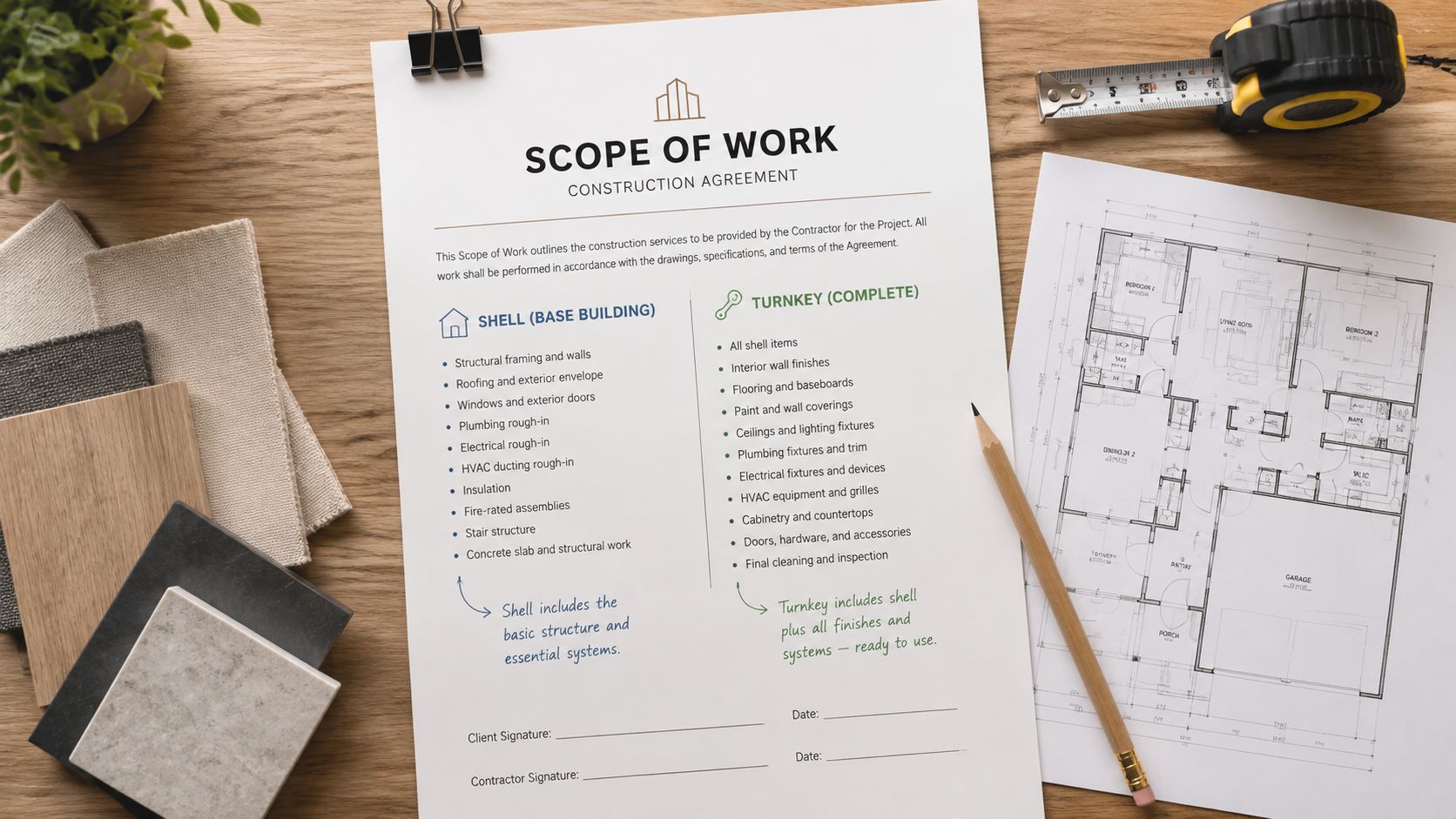
Turn every assumption into an exhibit
Request a written scope from each serious bidder before the negotiation meeting. Comparing those documents helps you see what builders in your region treat as standard and where their offers differ. A directory such as BarndoBuilderList can also help you prepare questions to ask a barndominium builder, particularly about who handles engineering, permits, schedule updates, and unfinished work.
Use a responsibility matrix that names the party responsible for each component. For example:
- Builder-supplied: Structural frame, roof, exterior doors, windows, electrical rough-in, plumbing rough-in, and HVAC equipment.
- Owner-supplied: Flooring, lighting fixtures, appliances, cabinets, paint, and interior finish materials.
- Shared approval: Material substitutions, design revisions, allowance selections, and site-related changes.
Include a change procedure requiring written approval, a price adjustment, and a schedule impact before changed work begins. A buyer who negotiates this process early has far more control than one who tries to reconstruct verbal promises at the final walkthrough.
2. Research Builder Track Record and Verify Website Evidence
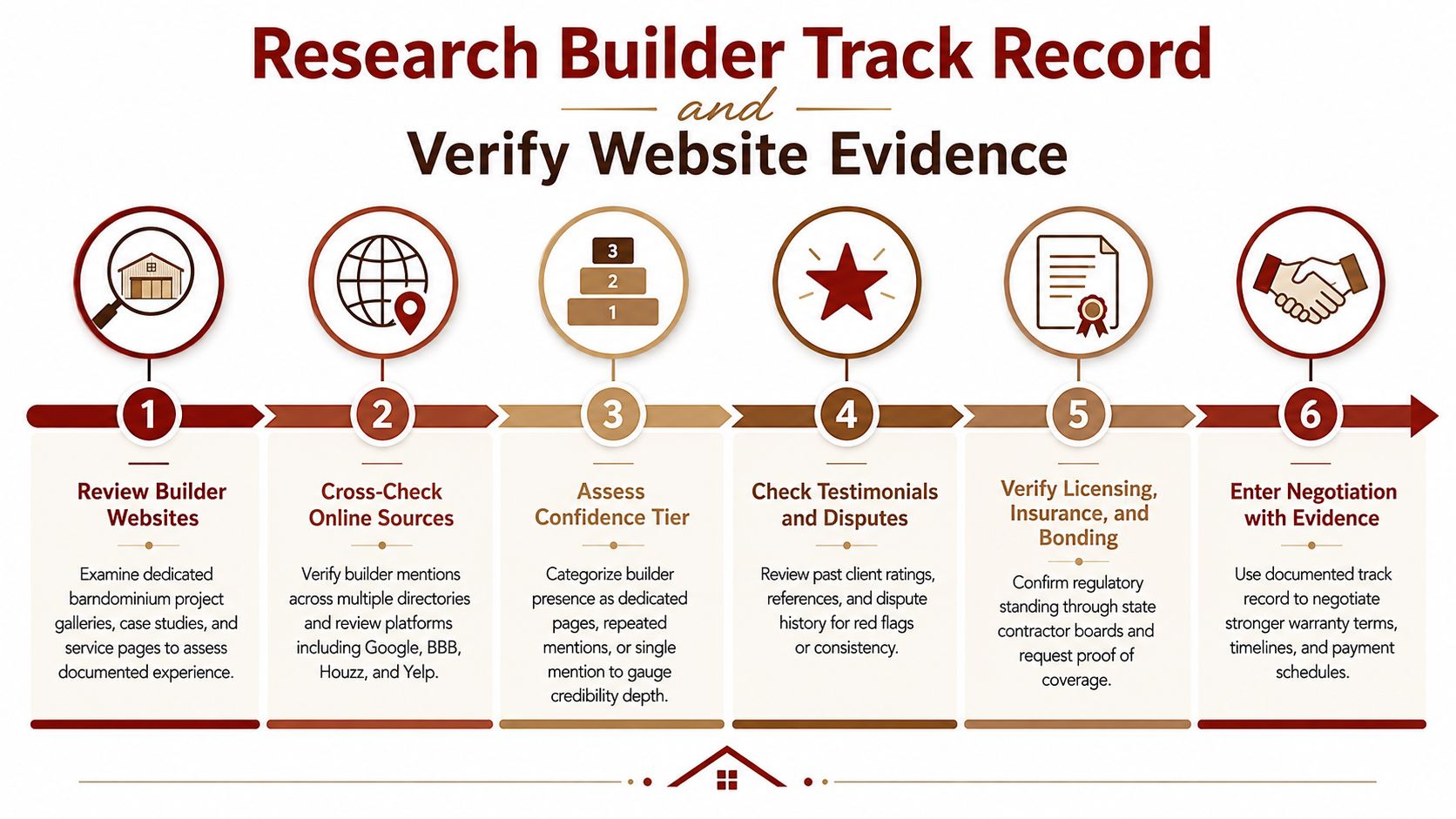
A builder's website is useful evidence, but it isn't proof by itself. Look for repeated, specific evidence of barndominium work across project pages, galleries, service descriptions, and completed-home references. A builder who mentions metal buildings once may have a different capability from a contractor with documented experience coordinating foundations, steel erection, insulation, mechanical systems, and residential finish-out.
BarndoBuilderList uses observable website signals and confidence tiers to organize builder research. Its state pages can help you find candidates with dedicated barndominium pages, repeated project references, or more limited mentions. Treat those signals as a starting point for verification, not as a substitute for licenses, references, insurance certificates, or direct questions.
Verify the work behind the marketing
Ask for recent references from projects with a similar scope, size, construction method, and level of finish. Speak with owners about schedule communication, allowances, change orders, cleanup, warranty response, and whether the final result matched the original proposal. If possible, ask the builder for permission to visit a completed project and inspect details such as roof penetrations, flashing, interior moisture control, doors, and finish quality.
Search the builder's name across Google, the Better Business Bureau, Houzz, and Yelp. Don't focus only on the star rating. Look for patterns in complaints and responses. Repeated disputes about unexplained allowances, unfinished work, communication, or lien releases deserve more attention than an isolated negative comment.
Verify the builder's license status through the relevant state or local contractor board, and request current general liability, workers' compensation, and bonding documents. If online evidence is thin, negotiate stronger documentation, clearer warranty remedies, more conservative payment releases, and a larger holdback where local law permits. Limited public evidence doesn't prove poor performance, but it does justify more verification before you give the builder control of project funds.
3. Lock Down Timeline, Milestones, and Payment Schedules
A payment schedule should pay for verifiable progress, not optimistic calendar promises. Start with the builder's proposed sequence for a comparable barndominium, then convert that sequence into milestones that an owner, inspector, architect, or independent consultant can verify. A useful schedule might distinguish foundation completion, frame erection, a weather-tight shell, mechanical rough-ins, substantial completion, final inspection, and warranty closeout.
Don't define a milestone as “foundation done” or “electrical substantially complete.” State what evidence closes it. Foundation completion could require the relevant concrete work, required cure period, inspection approval, and delivery of inspection records. A weather-tight shell could require the roof, exterior walls, windows, and doors to be installed and capable of keeping ordinary weather out.
Tie every draw to photographs, invoices where appropriate, inspection sign-offs, and lien waivers. The appraisals and draws guidance can help you prepare questions for your lender and builder about documentation and release procedures.
Use holdback as a control, not a punishment
A holdback or retainage keeps a portion of the contract funds unpaid until defined conditions are satisfied. Those conditions might include final inspection approval, completion of the punch list, final lien waivers from the builder and major subcontractors, delivery of paid invoices, and a stated period of occupancy without unresolved defect claims. Check local law before selecting the amount or structure.
The contract should also distinguish substantial completion from final completion. Substantial completion can mean the home is usable for its intended purpose, with only minor punch-list work remaining. Final completion should require the agreed punch-list items, closeout documents, lien releases, warranties, manuals, and approvals.
Address delays fairly. Excuse delays outside the builder's control, such as documented permitting interruptions or an owner-directed scope change, while preserving remedies for avoidable delays. Require prompt written notice, supporting evidence, and a revised schedule. A builder shouldn't receive an automatic extension just because a supplier or subcontractor was poorly managed.
4. Negotiate Warranty Terms and Establish Dispute Resolution Mechanisms
Warranty language should answer four questions before construction begins. What is covered, how long is it covered, how does the buyer give notice, and what happens if the builder doesn't cure the defect? A general promise to “warrant workmanship” leaves too much room for disagreement, especially when structural work, roofing, HVAC, plumbing, electrical systems, and finishes involve different trades.
Separate the categories. Structural components, building-envelope issues, mechanical systems, and finishes can have different warranty periods and inspection requirements. Define defects objectively. “Roof leaks at the north elevation” is easier to evaluate than “roof problems.” “The HVAC system fails to maintain the agreed performance under specified operating conditions” is more useful than “HVAC malfunction.”
Make the remedy process usable
Require written notice with photographs, location details, and a description of the problem. Give the builder a defined period to inspect, then establish a reasonable cure period for confirmed defects. The contract should explain what happens if the builder doesn't respond, refuses responsibility, or fails to complete the repair. Depending on local law and the agreement, available remedies might include repair, replacement, reimbursement, or use of retained funds.
Require delivery of as-built drawings, equipment manuals, product warranties, maintenance instructions, inspection records, and approved material substitutions. Those documents help the owner maintain the home and prove what was installed when a warranty issue arises.
A punch-list clause should require the parties to inspect the project together, record unfinished or defective items, assign responsibility, and set completion dates. Don't allow the builder to declare final completion while material deficiencies remain undocumented.
Practical rule: A dispute clause is only useful if it explains the path from notice to resolution, names the decision-maker, controls costs, and preserves urgent rights where delay could cause additional property damage.
Consider mediation before arbitration or litigation, but have local counsel review the venue, governing law, fee allocation, limitations, and any waiver of court remedies. A low-cost informal process may resolve a minor finish dispute, while a structural or payment dispute may require a more formal mechanism.
5. Verify Local Permitting Requirements and Builder Licensing Upfront
Permit responsibility belongs in the contract, not in a hallway conversation. Before signing, confirm with the county or municipality whether the proposed barndominium use, setbacks, driveway access, septic plan, flood requirements, fire separation, and utility connections are allowed on the property. Rural land can still carry zoning, subdivision, environmental, or building restrictions that affect the design.
Ask the builder for the current license number and verify it through the applicable state or local licensing authority. Request copies of active general liability insurance, workers' compensation coverage where required, bonds, and any registrations relevant to the work. Include those documents as contract exhibits and state who must keep them current.
Assign permit duties line by line
The agreement should identify who prepares drawings, hires engineers, submits applications, pays fees, responds to plan comments, schedules inspections, and obtains the certificate of occupancy. It should also state who bears the cost if the builder's incomplete or incorrect submission causes a resubmittal.
Use BarndoBuilderList's permitting and inspection builder resources to identify candidates whose profiles may help you ask about local experience. Then verify that experience directly with the jurisdiction and the builder's references.
Don't assume a builder licensed in one state, county, or specialty can perform every part of the project at your site. Some jurisdictions distinguish among general contracting, post-frame construction, electrical work, plumbing, HVAC, and structural engineering. Require the builder to identify subcontractors and confirm that each trade has the credentials the jurisdiction requires.
If the authority denies the proposed use or imposes a material restriction that makes the agreed project impractical, the contract should explain whether either party can terminate, how deposits are handled, and which preconstruction costs remain payable. That clause protects both sides from treating an impossible project as a default.
6. Address Material Costs, Supply Chain Delays, and Price Escalation Clauses
Barndominiums combine steel, concrete, lumber, insulation, windows, doors, mechanical equipment, and finish materials. Each category can have a different ordering schedule and substitution risk. A proposal that appears fixed may contain allowances, exclusions, provisional sums, or escalation language that shifts uncertainty to the owner.
Ask for a cost breakdown that separates major materials, labor, equipment, subcontracted work, allowances, taxes, freight, and builder markup. You don't need every internal business expense to negotiate intelligently, but you do need to know which components are fixed and which remain open.
Choose a price model deliberately
A fixed-price contract provides predictability, but builders may include more contingency or narrow the scope to control risk. A cost-plus arrangement can make legitimate changes easier to handle, but it requires stronger audit rights and approval controls. An escalation clause may be reasonable for volatile materials, but it should identify the affected item, measurement method, notice period, documentation, cap, and buyer's options if the increase becomes unacceptable.
Don't accept a clause that lets the builder increase the entire contract price because one input rose. Limit adjustments to documented increases in specified materials, and require the builder to seek commercially reasonable alternatives before passing through the cost.
State who pays for supplier failures, substitutions, storage, freight changes, and remobilization. If the builder chooses a supplier that can't deliver, the contract can distinguish that decision from an unavoidable disruption. Require written buyer approval before a substitute changes appearance, performance, warranty coverage, energy characteristics, or maintenance requirements.
For allowances, define the selection deadline and the calculation for overages or credits. If an owner chooses a product above the allowance, the change order should show the product cost, labor effect, taxes, freight, markup, and schedule impact. If the selected product costs less, the contract should explain whether the difference becomes a credit.
7. Document Change Orders and Establish Clear Change Request Procedures
Change orders are normal on a custom home. Uncontrolled changes are not. An owner may ask for a larger opening, upgraded HVAC zoning, different siding, additional outlets, or a revised interior wall. The builder may discover unsuitable soil, a design conflict, or a product that has become unavailable. Each situation needs a documented decision before the work proceeds.
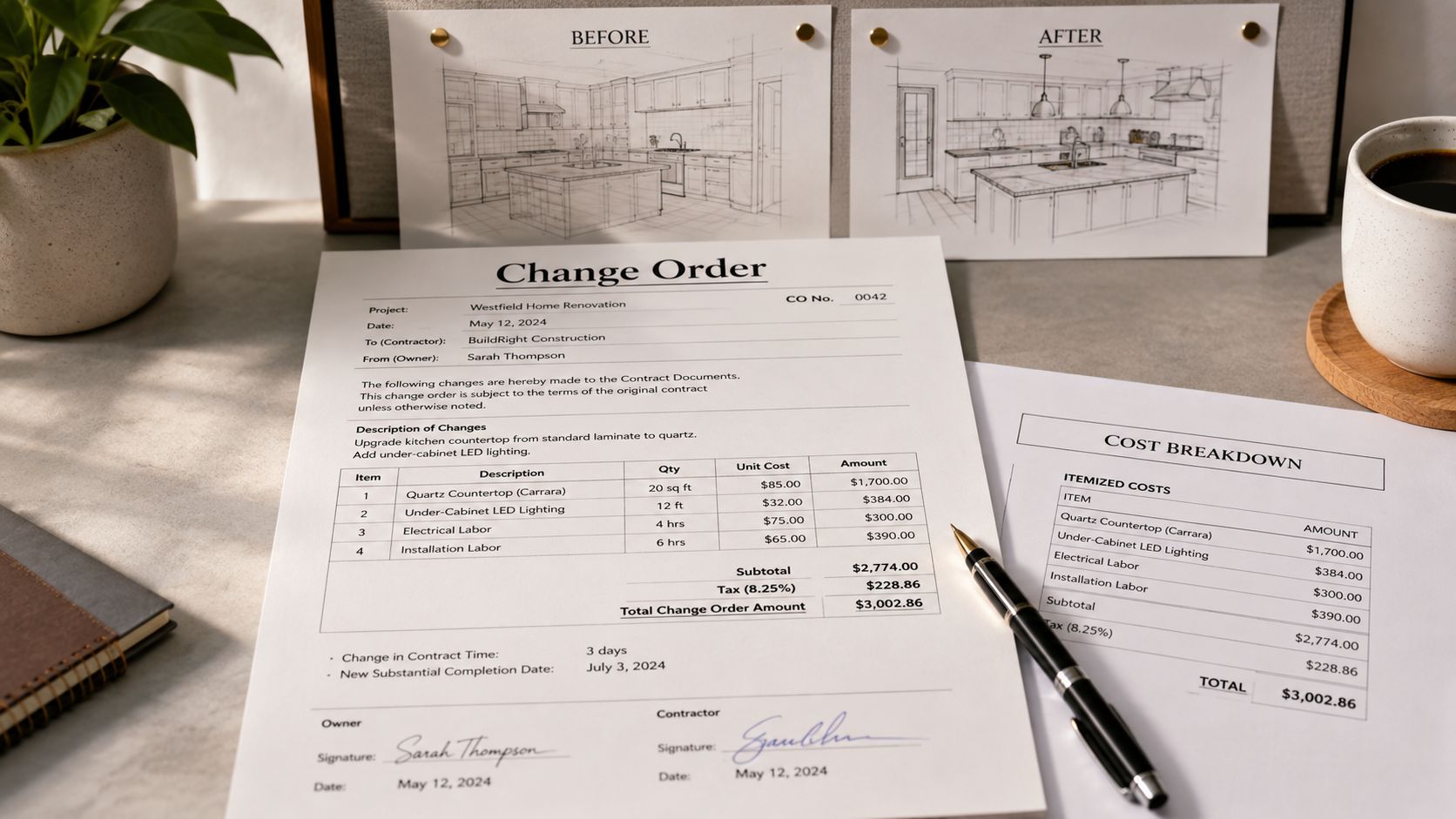
The change order form should identify the original requirement, proposed revision, labor, materials, subcontractor charges, builder markup, taxes, schedule effect, and revised contract total. It should include photographs or drawings when the change affects layout, structure, finishes, or systems.
Stop verbal approvals from becoming invoices
Use a simple rule in the contract: no changed work begins until both parties sign a written change order and any required deposit is received. State that unauthorized work isn't compensable unless the owner later ratifies it in writing, subject to applicable law. This protects the owner from surprise charges and the builder from later claims that an approved revision was never requested.
A practical approval process can include:
- Scope description: Identify precisely what will be added, deleted, or substituted.
- Price breakdown: Separate labor, materials, equipment, subcontractors, taxes, and markup.
- Schedule impact: State whether the change adds time, removes time, or has no approved effect.
- Evidence: Attach revised drawings, product details, photos, and inspection requirements.
- Signatures: Require the owner and builder to approve the same dated document.
Keep the original scope, the signed change order, and completion photographs together. If the builder proposes value engineering, require the alternative to meet the agreed performance, code, appearance, and warranty requirements. A cheaper substitute isn't a savings if it creates maintenance or approval problems later.
Set an escalation point for cumulative changes. If revisions materially affect the budget, financing, permit, or completion date, require a written budget and schedule review before further discretionary work. That pause gives the owner a chance to decide whether the improved feature is worth the downstream impact.
8. Secure Comprehensive Insurance and Liability Protections
A barndominium site may involve cranes, lifts, welding, roofing, excavation, concrete placement, electrical work, and several subcontractors. Ask who bears the risk if a worker is injured, a neighboring property is damaged, stored materials are stolen, or a partially completed structure suffers a fire or storm loss. The answer should come from current insurance documents and contract language, not from the builder's general reassurance.
Before work begins, request certificates of insurance and the endorsements that provide the promised protection. Confirm the named insured, policy period, coverage type, limits, exclusions, deductibles, and project address. Ask whether the owner and lender, if applicable, can be named as additional insureds where appropriate.
Cover the project, people, and third parties
General liability addresses certain third-party injury and property damage claims. Workers' compensation may address employee injuries, subject to state requirements and policy terms. Builder's risk or course-of-construction coverage may address damage to the structure and materials during construction. Those coverages solve different problems, and one policy shouldn't be treated as a substitute for all the others.
Require the builder to maintain coverage throughout the project and notify you before cancellation, reduction, or expiration. Extend equivalent requirements to major subcontractors, particularly the metal erector, roofer, electrician, plumber, and HVAC contractor. Ask counsel whether the agreement should include waiver-of-subrogation provisions, indemnity language, additional insured endorsements, or umbrella coverage for higher-risk activities.
Don't rely on a certificate alone. Ask for the endorsement and confirm that the policy applies to the work, location, and parties described in the contract.
The contract should state what happens if coverage lapses. Work might pause until coverage is restored, and the builder might remain responsible for resulting costs where the lapse violates the agreement. Also clarify responsibility for owner-supplied materials, temporary utilities, site security, stored equipment, and damage caused by subcontractors.
Insurance isn't a replacement for careful scope, payment, or warranty terms. It is one layer in a risk plan that should match the actual construction activities and the requirements of your lender, jurisdiction, and attorney.
8-Point Contract Negotiation Comparison
| Item | Implementation Complexity 🔄 | Resource Requirements ⚡ | Expected Outcomes 📊 | Ideal Use Cases 💡 | Key Advantages ⭐ |
|---|---|---|---|---|---|
| Define Scope of Work with Precision and Visual Clarity | 🔄 Medium–High, detailed specs, drawings, contract language | ⚡ Moderate, time, plans, architect/attachments | 📊 Clear deliverables; fewer disputes and comparable bids | 💡 Before signing; multi-bid comparisons; mixed shell/turnkey projects | ⭐ Minimizes scope disputes; enforces expectations |
| Research Builder Track Record and Verify Website Evidence | 🔄 Medium, web and reference checks | ⚡ Low–Moderate, time, internet, reference calls | 📊 Identifies red flags; improves negotiation leverage | 💡 Pre-selection; rural or low-visibility builders | ⭐ Reveals credibility and documented experience |
| Lock Down Timeline, Milestones, and Payment Schedules (including Holdback) | 🔄 High, phased milestones, legal/payment structures | ⚡ High, legal review, escrow, inspections, admin | 📊 Protects funds; aligns incentives; reduces indefinite delays | 💡 Large contracts, financed projects, long timelines | ⭐ Secures payment protection; prevents liens; enforces schedule |
| Negotiate Warranty Terms and Establish Dispute Resolution Mechanisms | 🔄 Medium, warranty drafting and ADR clauses | ⚡ Low–Moderate, legal review, documentation | 📊 Defined remedies; lower dispute costs; post-completion protection | 💡 Complex systems or long-term ownership | ⭐ Enforceable remedies; reduces litigation risk |
| Verify Local Permitting Requirements and Builder Licensing Upfront | 🔄 Medium, jurisdictional and licensing checks | ⚡ Moderate, licensing boards, zoning offices, permit fees | 📊 Prevents permit rejections and regulatory delays | 💡 Cross-county/state projects or unfamiliar jurisdictions | ⭐ Ensures compliance; clarifies permit responsibility and costs |
| Address Material Costs, Supply Chain Delays, and Price Escalation Clauses | 🔄 Medium, escalation indexing and contingency rules | ⚡ Moderate, cost data, supplier vetting, contingency funds | 📊 Greater cost predictability; shared risk for volatility | 💡 Projects with metal frames, long-lead HVAC, volatile markets | ⭐ Limits escalation; defines substitution & cost-sharing |
| Document Change Orders and Establish Clear Change Request Procedures | 🔄 Low–Medium, standardized forms and approval workflow | ⚡ Low, templates, signatures, photo records | 📊 Controls scope creep; transparent cost and schedule impacts | 💡 Projects expecting owner-driven changes mid-build | ⭐ Prevents unauthorized charges; creates audit trail |
| Secure Comprehensive Insurance and Liability Protections | 🔄 Medium, verify policies, endorsements, COIs | ⚡ Moderate, certificates, insurer vetting, possible premium impact | 📊 Reduces owner liability; covers worker injury and construction loss | 💡 High-risk work (cranes, roofing), multi-trade sites, lender requirements | ⭐ Protects owner financially; ensures workers' comp and builders' risk coverage |
Leave the Negotiation With a Documented Decision
A strong negotiation ends with a contract package that a person outside the original conversation can understand. Before signing, confirm that the agreement includes the final scope, architectural and engineering exhibits, material schedules, exclusions, allowances, and a clear definition of whether the project is shell, turnkey, or hybrid. If a component isn't assigned to the builder or owner, treat it as unresolved.
Verify the builder independently. Check licensing and permitting capability with the relevant authorities, confirm insurance and bonding documents, contact references from comparable projects, and compare the builder's written proposal with the work shown in its portfolio. Use BarndoBuilderList state pages or ZIP code search to compare shortlisted candidates consistently, then perform your own direct verification. Its profiles are research aids, not endorsements.
Your pre-signing review should also confirm:
- Milestone payments: Each draw depends on measurable work and supporting evidence.
- Holdback release: Final inspection, punch-list completion, lien waivers, paid invoices, and agreed warranty conditions are clearly stated.
- Delay rules: Excused delays, notice requirements, schedule updates, and consequences for avoidable delays are defined.
- Price protection: Fixed-price items, allowances, escalation triggers, caps, substitutions, and documentation requirements are written down.
- Change orders: No verbal scope changes become billable work without the agreed written process.
- Warranty remedies: Notice, inspection, repair, replacement, refund, and escalation procedures are specific.
- Closeout documents: As-built information, manuals, warranties, approvals, and final lien releases have delivery requirements.
- Dispute procedures: The contract states how the parties handle negotiation, mediation, arbitration, litigation, emergency repairs, and costs.
A qualified local attorney should review the final contract before you sign, especially where the project involves substantial financing, owner-supplied work, multiple subcontractors, unusual land conditions, or a complex payment structure. The attorney can assess state-specific requirements that a general negotiation guide can't resolve.
The best contract negotiation tips aren't about forcing every term in your favor. They're about making the deal operational. The builder should know what must be delivered, the owner should know what evidence releases money, and both sides should know what happens when the plan changes. A barndominium agreement is strongest when responsibilities, approvals, records, and consequences are visible before construction begins.
BarndoBuilderList offers state and ZIP code research tools, builder profiles, scope tags, and buyer guides that can help you compare candidates before negotiating a barndominium contract. Visit BarndoBuilderList to build a cleaner shortlist and prepare more focused questions about scope, permits, payment controls, and project closeout.
- contract negotiation tips
- barndominium contracts
- barndominium builders
- construction contracts
- builder due diligence